Cette publication est également disponible en :
 Français
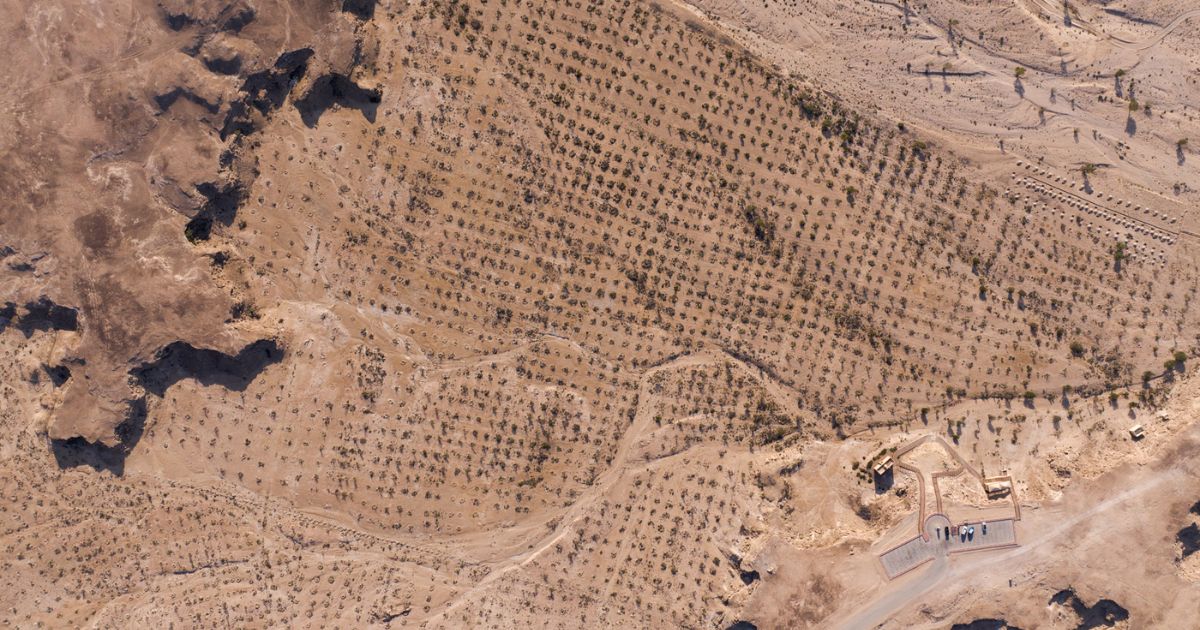
Over a few square kilometers in the south of the Sultanate of Oman, thousands of frankincense trees grow on the rocky ground of Wadi Dawkah, a UNESCO World Heritage Site. The trees produce a precious fragrant resin that was long traded at the same price as gold.
Editorial partnership
Ahmed slowly approaches the tree and looks up to observe the branches. He leans over and presses the small wicker basket with a dromedary leather handle against the trunk. He then begins to delicately scrape one of the branches with his manghaf, a traditional Omani tool specifically designed for tapping trees which has a solid wooden handle that allows for a steady hand. Quickly, the basket, which is about the size of a large bowl, fills with small, translucent amber-colored beads that look like jewels.
We are in the fabled Wadi Dawkah, in Oman’s Dhofar region, just 200 kilometers from the Yemeni border. Along with three other sites in the region, the location was listed as a UNESCO World Heritage Site in 2000 as a valuable testament to the ancient incense route. Thanks to the expertise of Amouage and the assistance from fragrance and flavor company DSM-Firmenich with the distillation, the 5,000 frankincense trees growing here on 1,500 hectares will soon provide the perfume industry with a resin whose origin is completely traceable and sustainable.
A thousand-year-old resource
Boswellia sacra is the scientific name for the plant with gnarled branches and deciduous leaves that grows in the south of the Arabian Peninsula. The frankincense tree is renowned for producing a fragrant resin that has been harvested for thousands of years by local shepherds. The precious gum was long traded at the same price as gold and has captivated kings, emperors and pharaohs around the world for millennia. Its sparkling, mineral scent, which is both fresh and balsamic, has been used to treat many ailments over the centuries and is a favorite of perfumers today.
The frankincense tree is highly adaptable: It can survive in any environment in Southern Oman, growing on arid, sandy soils, by the sea, in rocky deserts and on mountaintops. It is the climate that matters to this wild plant – hot and dry, with sunshine, wind and the water of the Khareef, the monsoon that greens the mountains of Dhofar between July and September and transforms the Omani landscape.
Boswellia takes ten years to become productive. In the meantime, it has to ward off a few enemies. First, termites, to the point that branches sometimes have to be cut down to protect the plant. But also, dromedaries, which are fond of its young shoots. When the tree is cultivated, it should not be overwatered; otherwise its roots will rot.
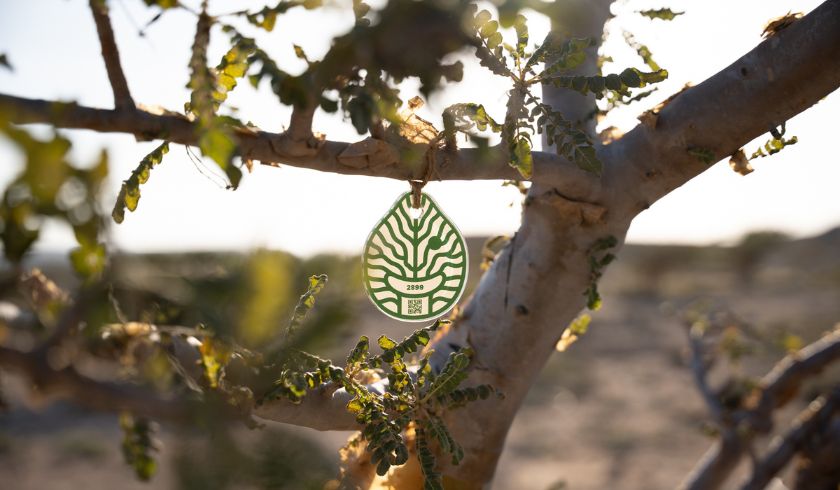
Small tree tags with QR codes hang from the branches of the frankincense trees. These codes reveal strategic information about the plant: its height, the abundance of its leaves, the exact location where it grows, a photograph of its most beautiful features and, later, the date of the last harvest.
Ancestral techniques
The frankincense resin harvesting system is very simple. And it is extremely well codified because it has not changed for 3,000 years. The cycle begins after the Khareef and lasts nearly nine months. To work on the thousands of frankincense trees in Wadi Dawkah, five Omani workers start at dawn or at the end of the day, shortly before sunset, for three to four days.
The tapping technique consists of making small cuts across the tree trunk to remove the brown bark, which is as thin as paper. Peeling it off delicately, the harvesters make six or seven openings a few millimeters wide, called signatures, which will be enlarged three weeks later. They begin by incising the base of the trees, where they are strongest – and where resin production is most profitable. Then they work their way upwards, sparing the youngest parts. Their secret? To strip away a little of the tree’s flesh without creating any deep wounds. The workers take care to maintain a balance between tapping and respect for the plant: They consider the frankincense trees their children.
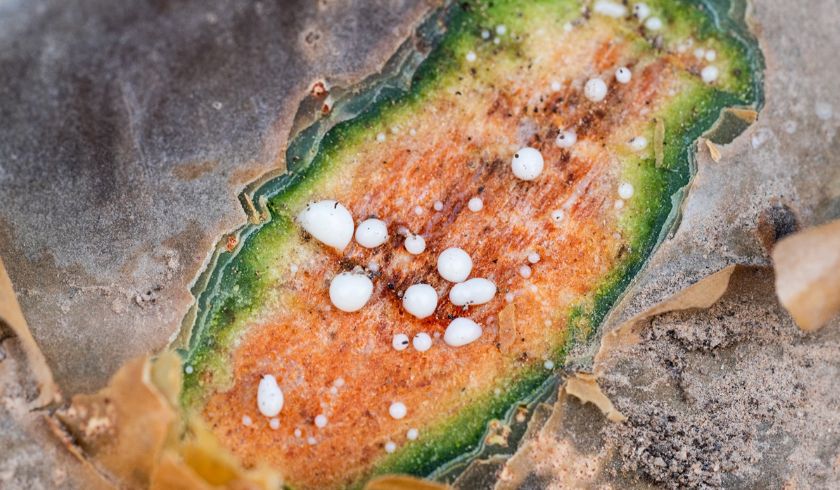
This historic practice, if done properly, does not endanger the resource. But it does cause the plant to react. It is a defense mechanism that causes these milky tears, sticky like chewing gum, to bead on the surface of the young wood, dry and solidify in three weeks – or just 15 days when it is warmer.
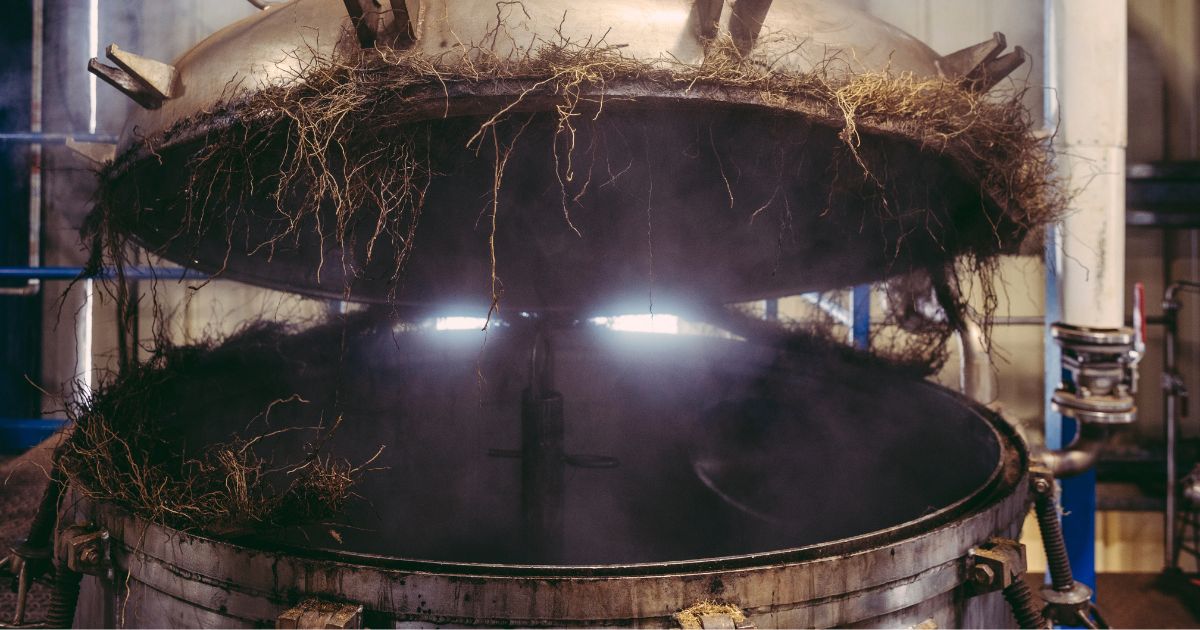
This controlled process is repeated several times per season. After two years of tapping, the plant is left to rest for a year. Each frankincense tree, some of which are several centuries old, yields a certain amount of resin per year: Production depends on the size and health of each specific tree. The raw material is distilled with a good yield of around 10%. Thus, to obtain 1 kilo of essential oil, around 10 kilos of gum are needed. The goal for Wadi Dawkah is to produce top-of-the-range frankincense for perfumery, whose authenticity can be guaranteed from the tree to the essence.
Visuals : © Amouage








Comments