Cette publication est également disponible en :
 Français
DSM-Firmenich continues to deepen the fruitful dialogue between art and fragrance since it created an olfactory signature for the musée national de la Marine in 2023. In 2026, Alexandra Monet, DSM-Firmenich perfumer, embodies the artistic approach of ceramicist Alice Riehl, whose work Herbarium Interior is on display at the musée de la Toile de Jouy in Jouy-en-Josas, just outside Paris.
The inspiration for the work
The exhibition is introduced by a toile de Jouy depicting a hydrogen balloon that once crashed in a field in Gonesse, near Paris, surprising and terrifying the peasants working there. It features a small boy hiding in a tree, finding refuge in the familiar and reassuring object. Alice Riehl’s first sight of the image set her mind wondering: in the era of widespread urbanization, shouldn’t that relationship be reversed? Is it not the case that humans now have a duty to protect their environment?
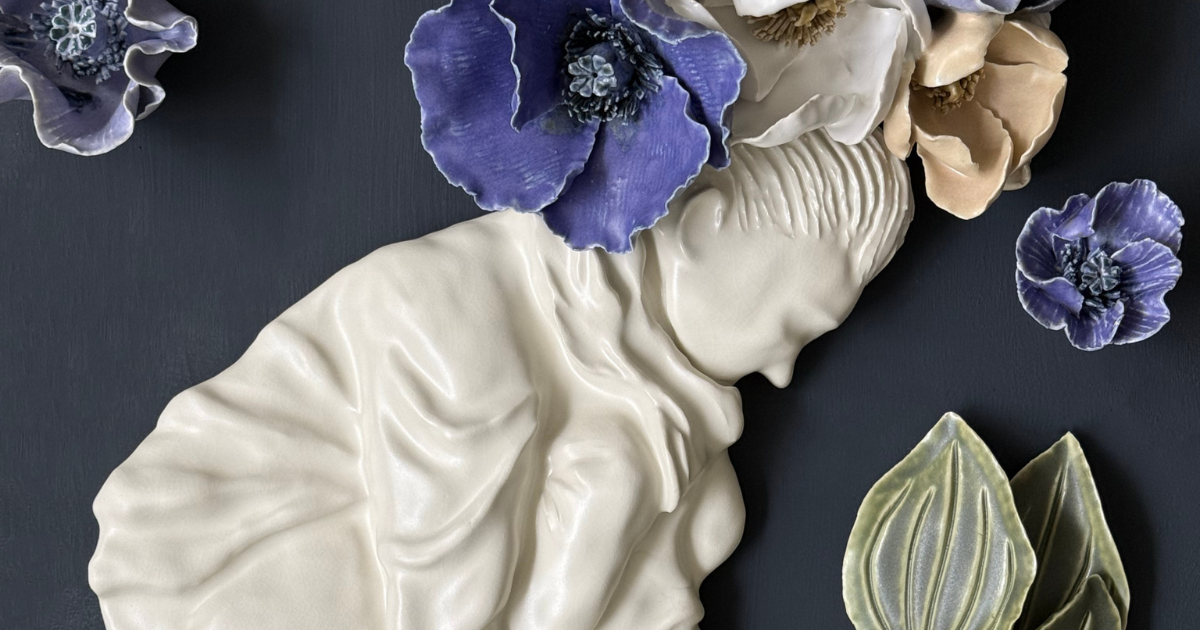
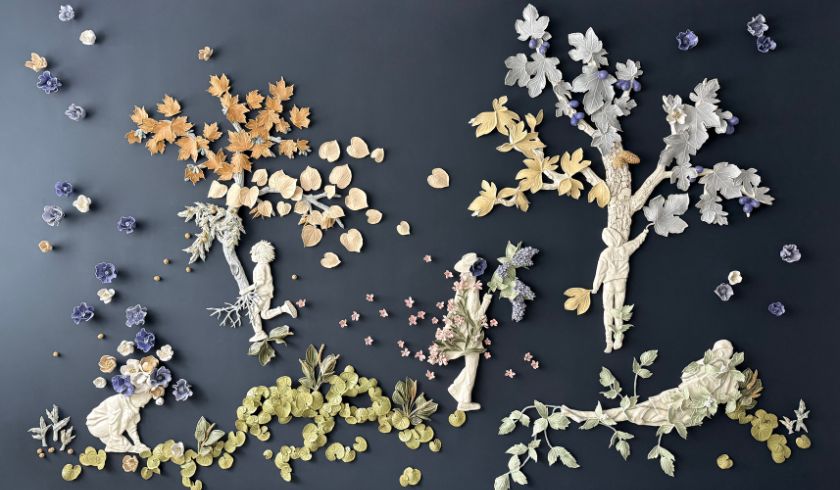
Before discovering the ceramicist’s work, a delicate scent evoking green nature invites exhibition visitors to come closer. Herbarium Interior, a series of colored porcelain murals arranged on a dark wall, is the fruit of the explorations that fed into the artist’s work: museum archives, photographs, and accounts from New Yorkers she gathered during her residency in the city, at Villa Albertine. Alice Riehl’s work with clay and modeling of organic forms pay tribute to the living world in a style as poetic as it is figurative, echoed in the museum’s collections. Ever since the Manufacture Oberkampf was founded in 1760, toile de Jouy has faithfully represented ever-present nature with floral motifs and pastoral scenes where humans and plants live together in harmony. The compositions, heirs to Enlightenment, place humans in an all-important natural world, portraying a balanced relationship that is now being disrupted by the omnipresence of the urban environment.
Alice Riehl’s project is rooted in this dialogue. Drawing on museum archives as well as interviews with botanists and environmentalists in New York, the work questions our contemporary bond with the plant world. “How can we reconnect with nature? What relationship do you have with plants?” The work incorporates fourteen personal accounts offered in answer to these questions. Some of the stories possess an evocative power that is striking. For instance, Saara, a New Yorker originally from western Asia, mentions the fig tree which, just like her, has adjusted to life in Brooklyn over the years and is now a familiar, almost native part of the urban landscape. The tree as well as its scent continue to link migrant city dwellers to their native land. And then there’s Elissah, fascinated by oleanders and their capacity to resist droughts and convinced that the beauty of their flowers is “the” key that opens the door to the plant world, an ideal so powerful it leads people to want to capture the plant’s essence by means of its fragrance. Alice Riehl was surprised to find that “lots of people mentioned smells in their accounts.” An observation that meant DSM-Firmenich’s proposal to perfume her work made perfect sense.
A fragrance that elicits emotions
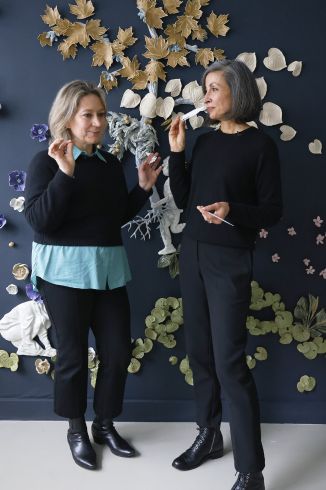
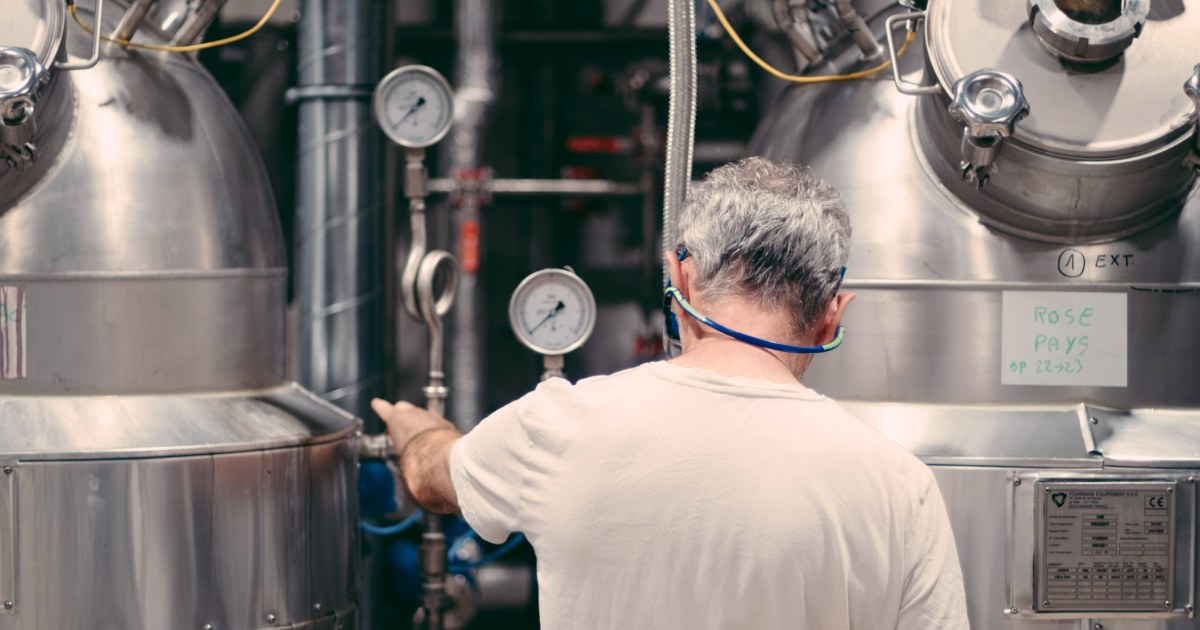
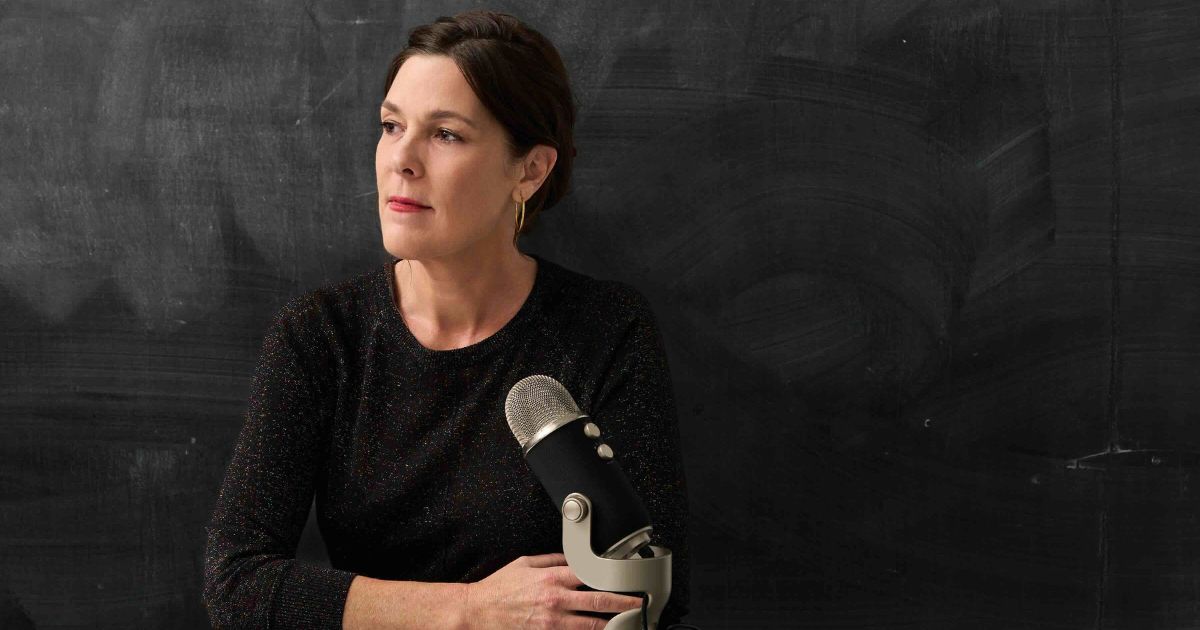
“I immediately fell in love with Alice’s work,” says Alexandra Monet. “Both for the figurative and plant-like aspect of her universe and the choice to use ceramic, which is perfect for diffusing fragrance.” A number of species sketched on paper during their initial discussions mirrored the perfumer’s own universe: peony, maple, oleander, and lilac. All plants that are known as mute; they cannot be extracted directly, but can be recreated thanks to modern-day technologies, such as NaturePrints, developed by the composition house. Gas chromatography and mass spectrometry analyses produce an olfactory signature very similar to maple and peony without having to pick the plants. Alexandra Monet used the materials to suggest several creative concepts, and one of them was an instant hit.
The fragrance, named Green Porcelaine, bridges the work’s form and substance, connecting the plant inspiration to the porcelain. “Alice’s matte glazing creates a soft, sensual shape I wanted to transpose in my creation.” The accord is built on a comfortable formula of musky, woody notes, with an edgy galbanum and sweet green basil opening giving way to a floral heart centering on peony, lily of the valley, and lilac. “I also referenced the link between nature and the mineral structure of the city using a captive molecule called Casmiwood, which has a woody smell that evokes damp earth as well as concrete,” explains Alexandra Monet.
The result astonished Alice Riehl, and she marveled at the accuracy of the figurative transposition right from the first trials. The fragrance is the olfactory double of her art. It accompanies the work and pulls us into its narrative, underlining its delicacy while revealing its fragility.
From scented art to olfactory visits
DSM-Firmenich has worked with museums on many occasions over the years. Some of the collaborations take the form of sensory accompaniments. For example, in 2025 Daphné Bugey devised an olfactory experience for the retrospective of Pekka Halonen’s work at the Petit Palais in Paris, creating a snow fragrance that invited visitors on a meditative stroll through the landscapes of Finland. Similarly, the olfactory signature Nathalie Lorson developed for the musée national de la Marine enriched the flowing architecture and enhanced the immersive experience offered to visitor. Other projects place fragrance at the heart of the artistic endeavor, as exemplified by Fabrice Pellegrin’s olfactory creation for Mustapha Azeroual during the Sillage exhibition at the Mougins photography center. The fragrance was diffused with beams of light, mirroring the work The Green Ray.
These initiatives can also address important questions in today’s world. For example, a series of projects presented in 2024 and 2025 during Paris Design Week and designed in collaboration with Alexandre Helwani and Lucas Huillet explored issues surrounding the climate, water (Eau Fraîche) and mental health (Folie) while experimenting with new sensory diffusion systems and incorporating neuroscience into the creative process.What will happen to the fragrance after the exhibition? Will Green Porcelaine be on sale? “That’s not what it was designed for,” Alice and Alexandra answer as one. They are both pleased that the note will remain inextricably linked to the work, and that it will be inconceivable to imagine them apart. After all, the beauty of flowers and fragrance alike is rooted in their ephemeral nature. The work will, however, get a second life during a New York exhibition as it returns to the city where it all began.
Herbarium Interior by Alice Riehl
Nature is here where we live.
From March 27 to May 24, 2026, at the musée de la Toile de Jouy, Jouy-en-Josas.






Comments