Cette publication est également disponible en :
 Français
Gowé, a very popular plant in West Africa where it is valued for its healing properties as well as being burned like incense, has now joined the perfumer’s palette. Amouage launched an initiative in partnership with CPL Aromas, Hamaé and Eden Ecosystem to develop an extract from the tubers harvested using traditional methods in northern Senegal.
Editorial partnership
Julien Rasquinet’s enthusiasm is palpable: Not every perfumer gets to witness firsthand the arrival of a new ingredient in their palette. It’s even more unusual for a natural ingredient. Most innovations in the fragrance industry relate to synthetic molecules. In rarer cases, they involve well-known naturals reinterpreted through novel extraction procedures. A new botanical variety is definitely headline worthy. “The last time a natural ingredient innovation really brought something new to our palette was pink pepper 30 years ago,” recalls the perfumer, who will soon be creating an industry-first fragrance for Amouage centering on gowé extract. The 2027 launch will mark the culmination of an exciting team adventure kicked off in 2024 by Renaud Salmon, Chief Creative Officer of the Omani high perfumery house Amouage, who fell in love with the roots and its extract. He discovered it thanks to Hamath Sall, who made him smell the extract on a rainy day in Montmartre, Paris. Hamath has since become a key partner in the new supply chain with his company Hamaé. “It’s the smell of Africa,” Sall told him. A justifiable claim, as gowé is found everywhere in many countries, including Senegal and Mali. Consumed as a decoction for its numerous health benefits for the body and mind, it is also ground and burned as incense, giving it an essential role in local olfactory cultures.
In a northern Senegalese village near the Mauritanian border, gowé has become more important than ever. It has been a source of income since 2021, with around 20 women from the village selling their gowé harvest to Hamaé. The company then supplies Eden Ecosystem with raw materials which will be turned into gowé extract and then provided to CPL Aromas. While the women of the village, like many other Senegalese women, have long harvested gowé for their personal use, the shift to a commercial footing has transformed an occasional occupation into a daily activity, setting the pace for their daily lives, and village life in general. Every morning small groups set off on foot, crossing the few kilometers separating their houses from what looks at first glance to be a vast plain scattered with desert date palms and acacias. The ground is covered almost entirely by dried grasses flattened by the sun and the heat – local temperatures rarely drop below 35°C. The grass fills the air with powerful notes of hay and tobacco mixed with the animal odor of goat and buffalo excrement from the animals that graze here every day, except during the rainy season. From June to October the plain turns into a huge watery expanse, which helps the gowé, very much an invasive plant, to proliferate. Its green stalks look like tiny reeds as they reach for the sky while an extensive network of black roots dotted with tubers burrows into the earth. Once the rain has gone and the earth has dried out, the women of the village arrive to harvest the tubers, the bright colors of their clothes a stark contrast to the monochrome straw tones of the landscape.
Gowé harvesting
The first stage in the harvesting process is digging. It takes strong blows with a spade to break up the first 5 centimeters of baked soil and reach the gowé roots. Aminata is used to it. She’s one of the project’s pioneers and has taught other village women the movements she has mastered perfectly. After a short while she removes the metal blade from her spade and uses the handle to strike the compact clods of earth she has loosened. The idea is to release the tubers within, leaving as much as possible of the soil on the ground. In a few hours’ time, carrying them on her head in a basin, she will take the kilos of tubers she has collected to another location where they will be scorched. Gowé tubers resist combustion: This second stage removes other parts of the plant – roots and stalks – still attached to them.
A kilometer from the plain the ground changes, sand replacing grass. The women use their spade handles to strike tree crowns and dislodge large thorns covering their branches. The fallen thorns are used to form a combustible bed for the contents of the basins everyone has carried here. One click of a lighter and everything goes up in flames. A plume of white smoke rises between the trees as the women remove the tubers, now even blacker, from the fire.
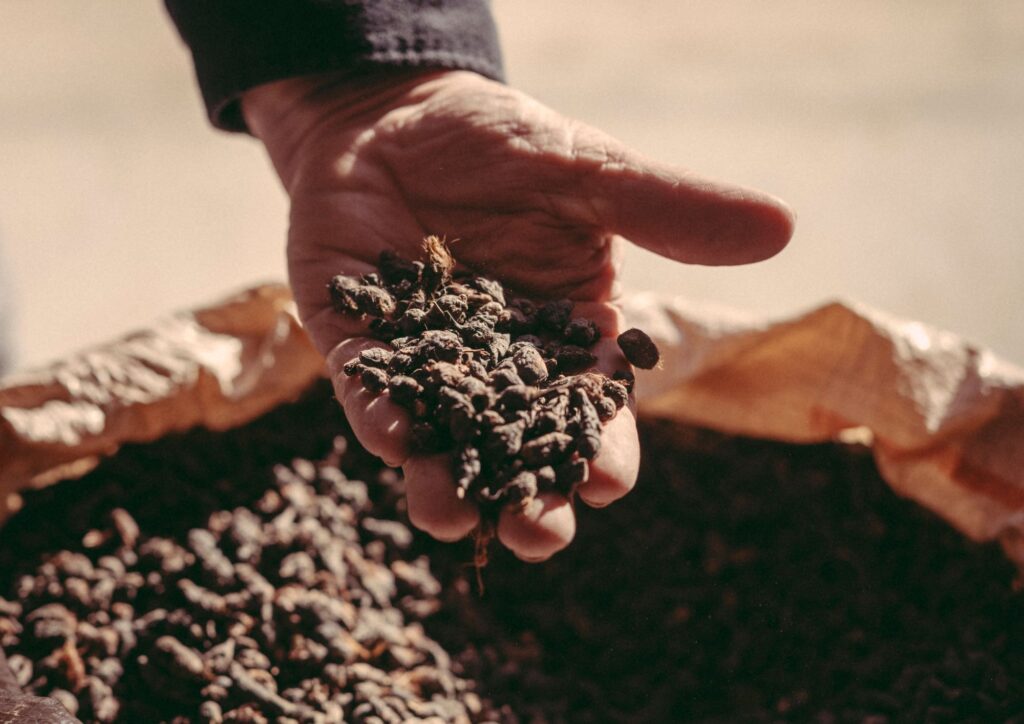
Once the tubers have cooled down the women gather them up, slowly tipping them from basin to basin so the wind blows away the ash and sand. They repeat the operation twice under a sun almost at its zenith. It’s time to return to the village. At the end of the day work begins again in the village: Gowé is placed in large mortars and pounded with heavy sticks. Although the remarkably hard tubers stay in one piece, this separates the ones that stay stuck together in little clusters. After taking the gowé out of the mortars, the next task is screening it in several sieves to separate smaller tubers from larger specimens. They are then divided into two different basins. The contents of each are carefully scrutinized and handled to spot and eliminate any bits of wood or stones hiding among the precious black pellets.
Drying is the final phase of the process. The women place a large plastic sheet on the ochre earth in the village and tip out the fruit of their day’s labor. The tubers are spread across the entire sheet surface and left in the sun for at least an hour, the heat bringing out their woody, peppery aroma. Lastly, they are weighed and placed in bags of different sizes. For each woman, 15 kilos represents around a week’s work. It’s the end of one adventure and the beginning of another: The bags travel by road to Dakar before being shipped to Le Havre then transported to Forcalquier, in the Haute-Provence Alps, where their cargo of gowé will be transformed into an extract.
From raw material to extract
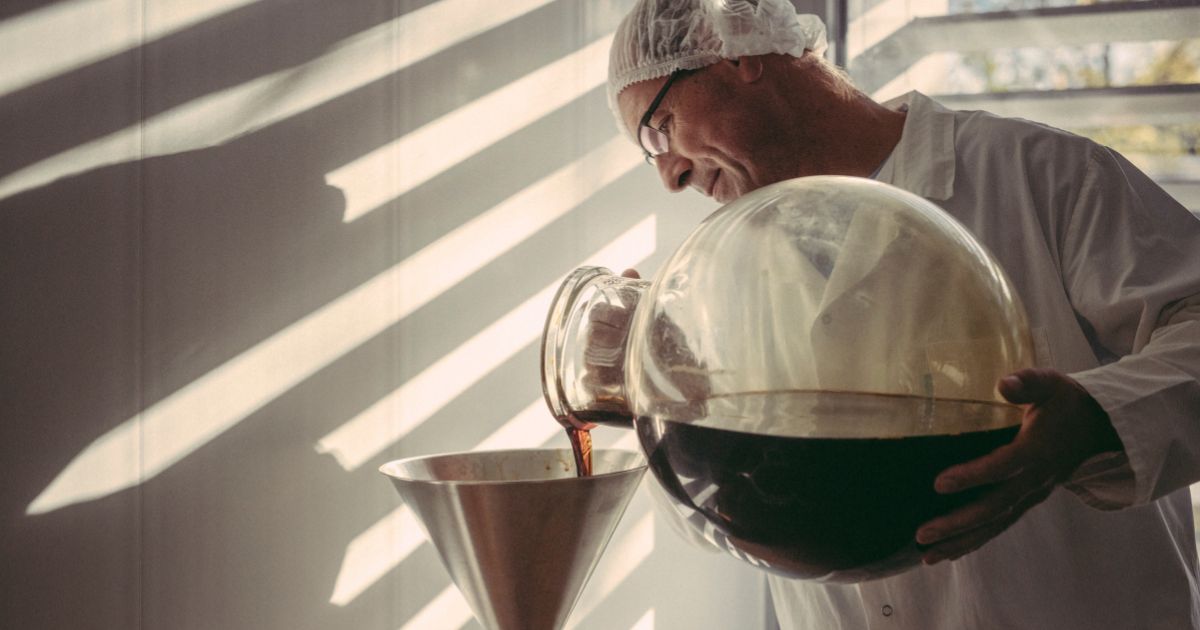
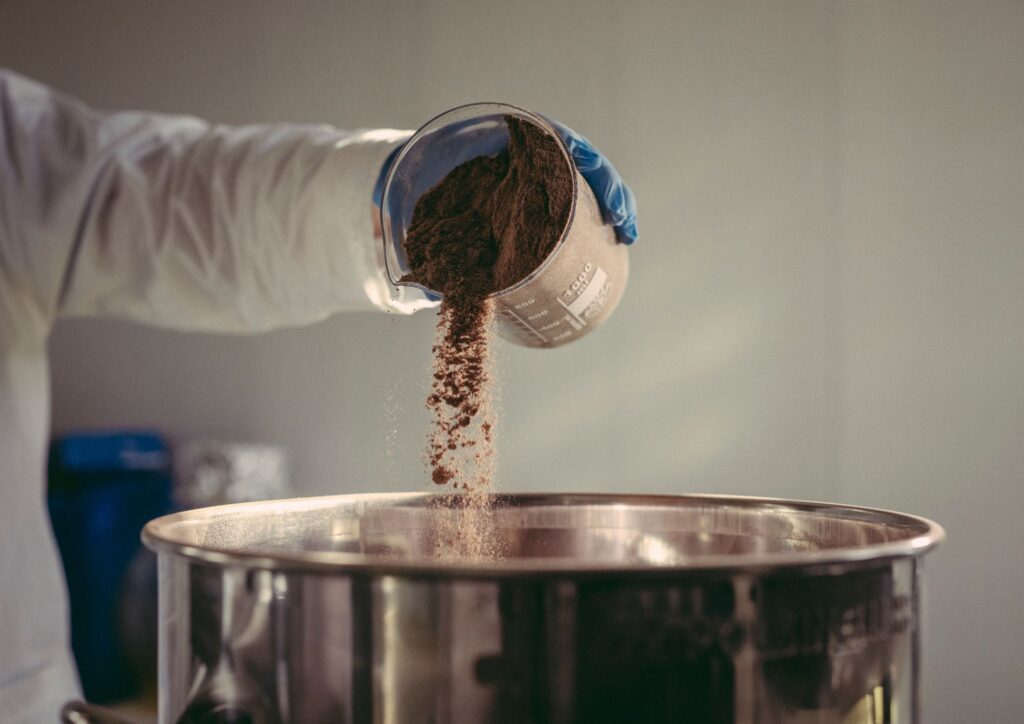
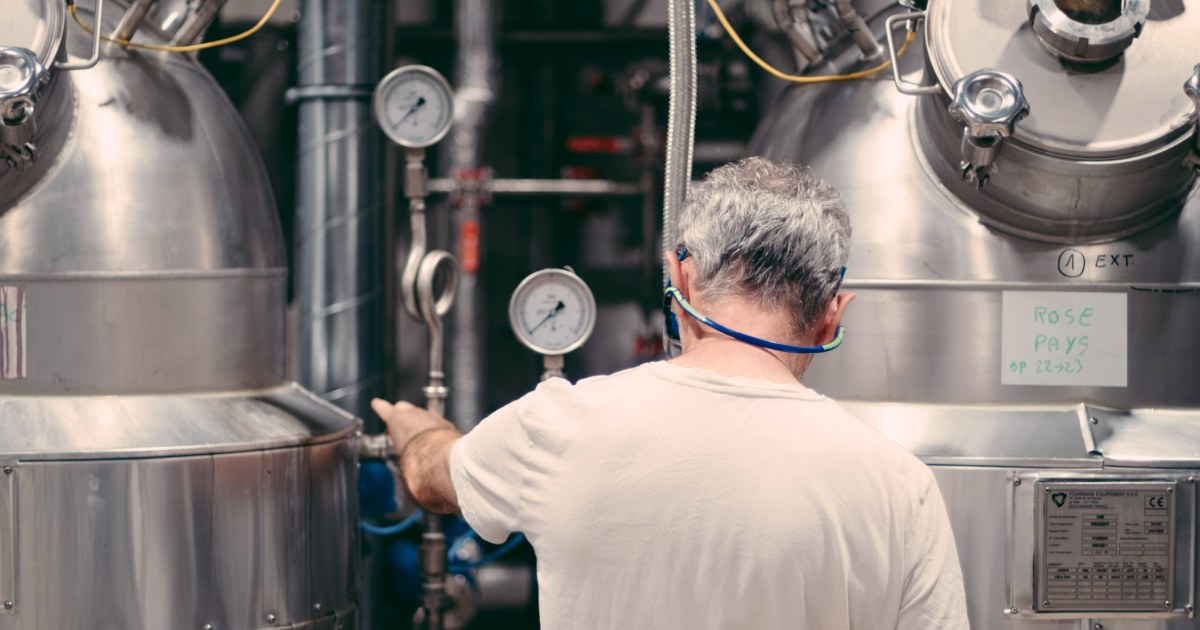
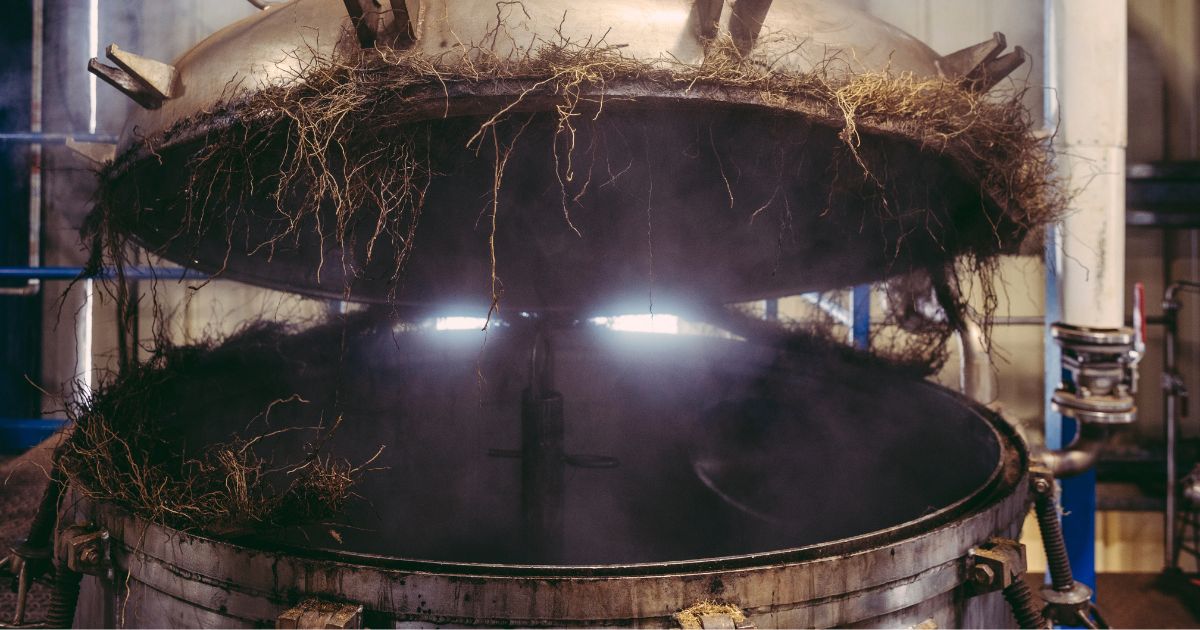
Renaud Salmon reached out to French naturals specialist Eden Ecosystem for help in developing the ingredient from the raw material. Trials using conventional distillation then infusion in alcohol proved inconclusive, and the team finally chose a less traditional technique to process the gowé: ultrasound-assisted extraction. The method is rarely used in the fragrance industry and is similar to the usual volatile solvent extraction, the difference being that its cycle includes an ultrasound unit. Ultrasound waves produce a cavitation effect in the material treated, meaning that modified pressure inside the plant cells causes the cells to burst and release a larger quantity of aromatic molecules than with conventional extraction methods. The cutting-edge technique is at the heart of Eden Ecosystem’s approach, thanks to the quality of the olfactory profiles obtained as well as its many environmental benefits: It is energy efficient since it works quickly at low temperatures, and it requires solvents that cause minimal pollution.
Once the team had found the best method, they still needed to write the exact protocol, raising a whole host of questions. How would they grind the very tough tubers? Which solvent should be used? What would the time and the temperature parameters be for the extraction process? It took four months and 70 or so trials on two samples of gowé from different parts of Senegal to produce the gowé extract as it exists today. The relatively short timeframe attests to the effort put in by everyone involved, from Eden Ecosystem’s R&D teams to the CPL Aromas offices where each trial was evaluated for its olfactory and physicochemical qualities. Adding an ingredient to the company’s palette entails a lot of testing to ensure it is creatively and commercially viable and complies with the strict regulations governing the industry. Each trial was painstakingly analyzed in line with a range of criteria, including its olfactory potential, stability, yield, cost price and the environmental footprint of the procedure used. This complex equation eventually produced the chosen extract, and everyone in the team is proud to see that it faithfully reproduces, even magnifies, gowé’s wonderfully rich olfactory profile. In terms of smell, it reveals woody, earthy notes evoking vetiver and cypriol, hints of hay and immortelle, the resinous tones of myrrh, and, more unexpectedly, plum and dried apricot facets. A complexity that just keeps building. “Gowé gets better over time,” says Glenn Moran, Global Innovation Manager at CPL Aromas. While he is delighted by the arrival of this exclusive ingredient for this project1, he is keen to highlight other aspects: “This is not just a new ingredient. It’s a whole new story, rooted in a continent whose traditions are not yet widely represented in the fine fragrance industry.” He also points out that there is still work to be done. The company is organizing an in-depth analysis of the supply chain to monitor the human and farming practices involved, assess the durability of supplies, and try to understand the influence of land and harvesting factors on gowé’s aromatic profile. In the meantime, Renaud Salmon and Julien Rasquinet are honing the formula of a fragrance soon to be introduced to the “Essence” collection. Amouage launched the collection in 2024 as a series of fragrances whose concentrates (mixture of aromatic ingredients) are infused for six months with Australian sandalwood chips. The alcohol which is used to dilute the concentrates is infused in oakwood barrels, produced in France by the cooperage Allary. A double infusion process and a perfect amount of time for gowé to fully unfurl its unique scent.
Credits: Nez média I Conception & Partnership Director: Mathieu Chévara I Director: Eléonore de Bonneval I Images & Video Editing: Gobifilms I Graphic & Sound Design: Marge Design I Music: Magnio by Baba Toumani Keita & Rico Brinx, Cezame Music I Amouage: Renaud Salmon, Andras Komar, Johanna Ratti, Francesca Bonati, Rayyan Alabdullatif I CPL Aromas: Joanne Brown, Rawya Catto, Armelle Jobet, Glenn Moran, Elsa Rahal, Julien Rasquinet I Hamaé: Hamath Sall I Eden Ecosystem: Rémi Pulvérail I Special thanks to Arielle Lauze.
Photos : © Romain Bassenne – Marge Design
- The article originally referred to “the arrival of this first all-natural captive.” This phrasing has since been clarified to better reflect the company’s original statement. (updated August 18, 2026) ↩︎






Comments