Cette publication est également disponible en :
 Français
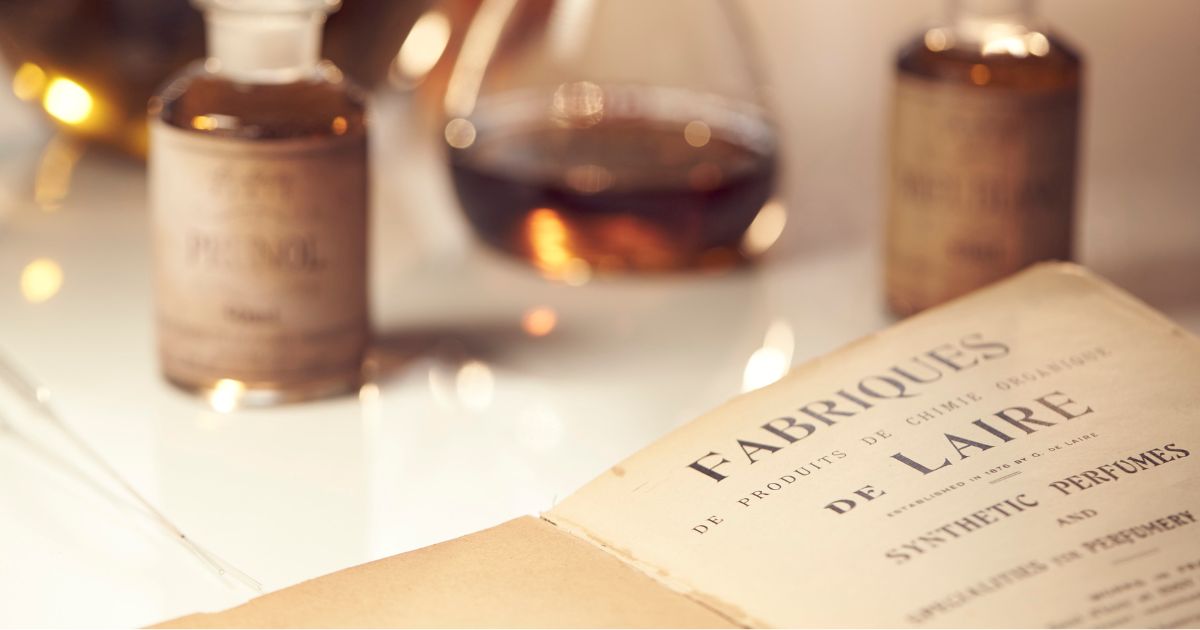
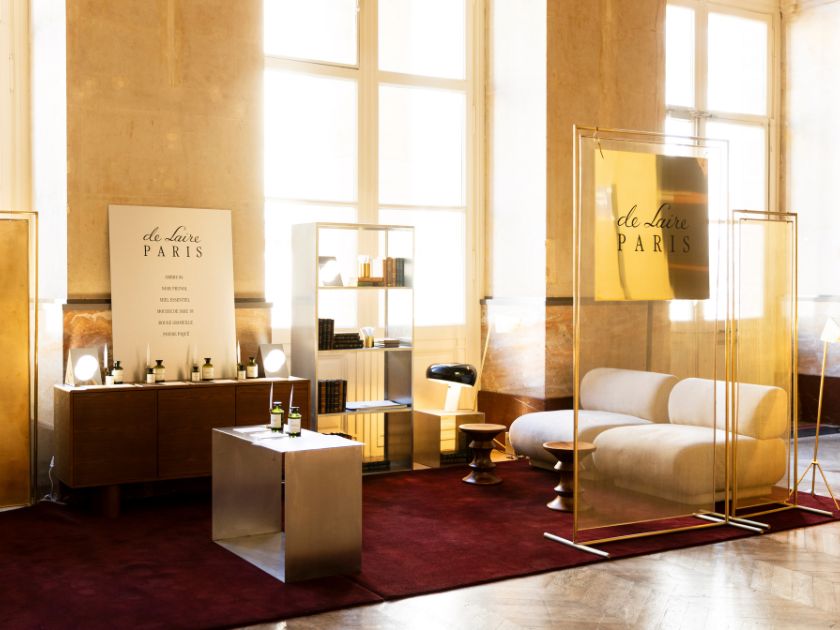
The Smell Talk at Palais Brongniart during Paris Perfume Week dedicated to the de Laire bases attracted a crowd of over 150 visitors, keen to listen to Symrise perfumers Aliénor Massenet and Pascal Sillon recounting the bases’ long history – and get the chance to smell some of them. While the de Laire name is unfamiliar to the general public, it has legendary status among perfume lovers. Fabriques de Laire was founded in 1876 and since then has contributed to a great many masterpieces of modern perfumery, from Guerlain’s L’Heure bleue to Femme by Rochas, creating the bases found in their formulas. A legacy today’s Symrise perfumers are continuing as they write a new chapter in the de Laire story.
This article was written in partnership with Symrise
De Laire yesterday…
Fabriques de Laire’s legendary status reflects the fact that it has trodden the same path as modern perfumery. Founded in 1876, the company witnessed a major revolution in the second half of the 19th century: the introduction of the first synthetic molecules into the perfumers’ palette thanks to the rise of organic chemistry. Fabriques de Laire produced and sold a number of the emblematic ingredients marking a new era in perfumery as soon as they were created, including vanillin, coumarin, and isobutyl quinoline. While they now are part and parcel of perfumers’ language, it was not always easy for fragrance creators at the time – accustomed as they were to working exclusively with naturals – to tame the new ingredients’ unfamiliar odors and unprecedented potency.
Their struggles were what inspired Marie-Thérèse de Laire, daughter of the founder’s nephew, to come up with the brilliant idea of proposing the molecules not by themselves, but “clothed” in other ingredients to make them easier to incorporate in compositions. In 1891 she began devising a series of bases, harmonious mixtures of a few materials centering on a synthetic molecule which could then reveal its full potential. Sometimes described as pre-perfumes, the de Laire bases quickly built up a faithful customer base. They won over an impressive number of fragrance houses, contributing to the movement that saw synthetic ingredients increasingly used by creators and appreciated by consumers. They thus played a key role in the modern perfumery revolution and the expansion of creative possibilities it ushered in. “Ambre 83 is a very good example of the de Laire bases’ contribution to the history of perfumery. As a base created in the 1900s, it opened the door to wider use of vanillin, one of the very first synthetic molecules, and one of those manufactured by de Laire,” explained Pascal Sillon during a conference at Paris Perfume Week. An iconic base for the company, Ambre 83 features in the formulas of a great many fragrances, including at Guerlain which gave it a central role in its ambery sillages.
…and today
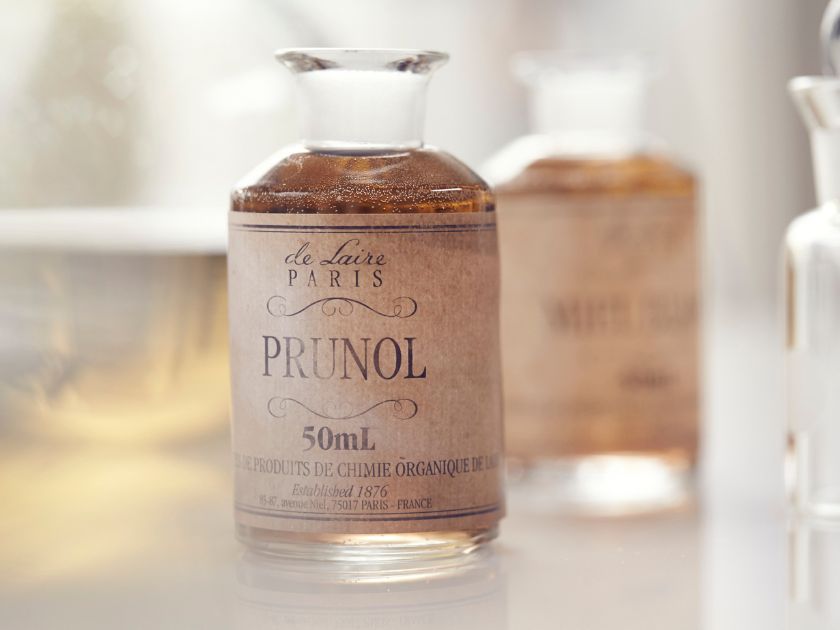
The de Laire company, owned by Symrise, and its famous bases continued to quietly find favor with a handful of loyal clients when, in 2010, perfumer Pascal Sillon was struck with the idea of shining a light on this jewel in the perfumery crown. After all, in addition to their fascinating hundred-year history, the de Laire bases have also had a profound impact on the collective unconscious, bringing a sometimes highly distinctive signature to many of the 20th century’s iconic fragrances. Examples include Habanita from Molinard (Mousse de saxe), L’Heure bleue and Mitsouko from Guerlain (Iriséine), and Bois des îles from Chanel (Ambre 83). A fabulous legacy brought to the attention of the Symrise teams thanks to Pascal Sillon’s work: he wrote his master’s thesis on them, inspiring the company’s perfumers to write the next chapters in the de Laire book with new creations that stay true to the de Laire bases’ original mission: promote synthetic ingredients, make them easier to use by creators, and help expand the horizons of contemporary perfumery. With one difference: while the bases of the past were always commercially available, today’s bases are captives, meaning that only Symrise perfumers get to use them.
At the World Perfumery Congress (WPC) in Miami in 2016, Symrise launched a new collection of contemporary de Laire bases created by its team of perfumers. They included three bases that Pascal Sillon and Aliénor Massenet revealed to the public at Paris Perfume Week in April 2026. Beginning with Ambre 84, a Pascal Sillon creation which echoes the modernity that distinguished Ambre 83 thanks to a molecule as important today as vanillin was last century: ethyl maltol with its hint of caramelized sugar, the cornerstone of modern-day gourmand fragrances. Aliénor Massenet then presented two bases she composed herself. Rouge Groseille unfurls a mouth-watering fruity note built on a remarkably powerful captive, while Poivre Piqué suggests a cold, spicy structure perfect for constructing an elegant fragrance. “The new de Laire bases adhere to the same philosophy as the historical bases,” says Aliénor Massenet. “Each one always contains a synthetic molecule, often a captive, and at least one natural exclusive to Maison Lautier 1795. That makes our bases twice as impossible to copy.”
At a time when dupes are flooding the perfumery market, guaranteed uniqueness is one of the advantages de Laire bases automatically confer on every fragrance that uses them. Unsurprisingly, the Symrise teams also receive requests from a number of clients asking them to compose tailored bases. “These custom bases sometimes become an olfactory signature for an entire range,” explains Pascal Sillon, who is delighted by the journey so far. “Today, the de Laire bases form a living, dynamic collection perpetuating the history of a legendary name in perfumery.” A name that may well soon become far more familiar.





Comments