Cette publication est également disponible en :
 Français
From Madagascar to Provence, fragrance begins life in the fields. Symrise patiently constructs new supply chains on lands where aromatic plants flourish before adding novel raw materials to its catalogue of Maison Lautier essences and then to the perfumer’s palette.
Editorial partnership
There’s no secret technology here, no hype. Innovation comes into play elsewhere: in how plants are selected, the care taken in cultivating, harvesting, and processing them, and, more broadly, the precision of natural ingredients shaped so they can reveal the breadth and depth of their qualities once they reach the bottle.
Innovation is also at work in the focus on the people who grow, harvest, and process the plants. Every essence is the fruit of the land but also of the women and men who work it. Entire communities that supply chains need to support by ensuring stable incomes while also meeting the needs of a fragrance industry looking for high quality products and authenticity.
White lavender, the perfumer’s new muse
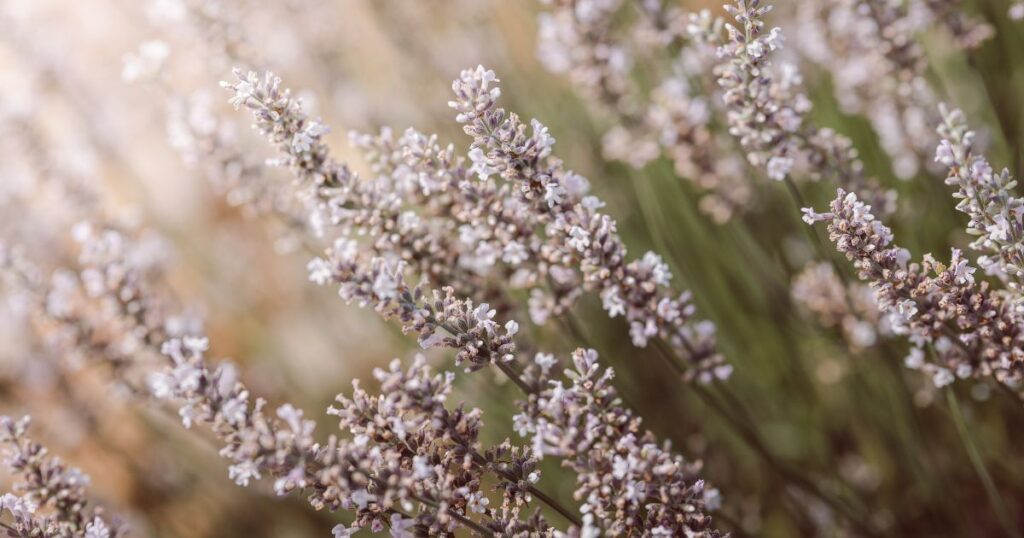
“It’s the first time perfumers have used a white lavender essence,” says an enthusiastic Solène Homo, Global Product Manager Captives at Symrise. “And we created the supply chain for the essential oil from scratch in Provence.”
Everything starts in the fields. For many years white lavender was seen as nothing more than a wild plant growing freely in Provençal landscapes. A perception that changed in 2012 when students from the Germany-based Symrise perfumery school on a trip to Provence spotted an unusual seedling, not then known as white lavender. The students were intrigued and spent time studying it, setting an unexpected journey in motion.
The variety, baptized Angèle, belongs to the same botanical species as blue lavender but has a very different olfactory profile. It was introduced to the perfumer’s palette in 2021, when it “totally changed our perception of the plant,” explains perfumer Pierre Guéros. Its signature? An aromatic facet that hints at sage mingled with apricot nuances redolent of osmanthus. In the bottle it makes a perfect partner for musky notes or a touch of tonka bean. It also brings a breath of fresh air to the fougère family. “Angèle lavender is far more floral and less terpenic than traditional blue lavender,” is how perfumer Aliénor Massenet describes it. A detail that changes everything.
However, a supply chain had to be established before it could be let loose to win over perfumers. In 2012 the Center of Applied Research for Producers of Mediterranean Perfume Plants and Aromatics (CRIEPPAM) identified the plant and began producing it using conventional methods. A first obstacle soon emerged: the crops’ fragile health, with certain bacterial infections potentially causing significant crop losses and endangering farms.
Symrise tackled the issue by teaming up with the Aromatic Plant Research Center. Together they launched an in vitro bio-regeneration program in 2020 aimed at producing completely healthy white lavender seedlings. The technique involves cellular regeneration in the lab. It takes more than a year to recreate an entire seedling and reconstruct its genome. A selection of hardy grandmother seedlings were used as the basis for propagating mother seedlings, then cuttings destined for producers.
White lavender is still rarely grown. Only two producers work on the Alpes-de-Haute-Provence region, supported by two nursey growers in Luberon. The essential oil is obtained using steam distillation directly at producers’ sites. Yields per hectare are slightly higher than those of traditional lavender.
The plant has an intriguing appearance, the brilliant white color evoking purity and delicacy. “Clients like it a lot,” points out Solène Homo. Particularly in Asia, especially China, where the Provençal image has lost none of its appeal. As a rare product still only available in limited quantities, white lavender is establishing itself as a niche ingredient in perfumery and will be featured in upcoming launches. It is also already being considered for uses further afield than the fine fragrance industry. For instance, its moisturizing properties open the door to future cosmetics applications – as long as production can be ramped up. Because the current priority is clear: to turn this distinctive lavender into a new olfactory signature.
Cinnamon, a game-changing spice
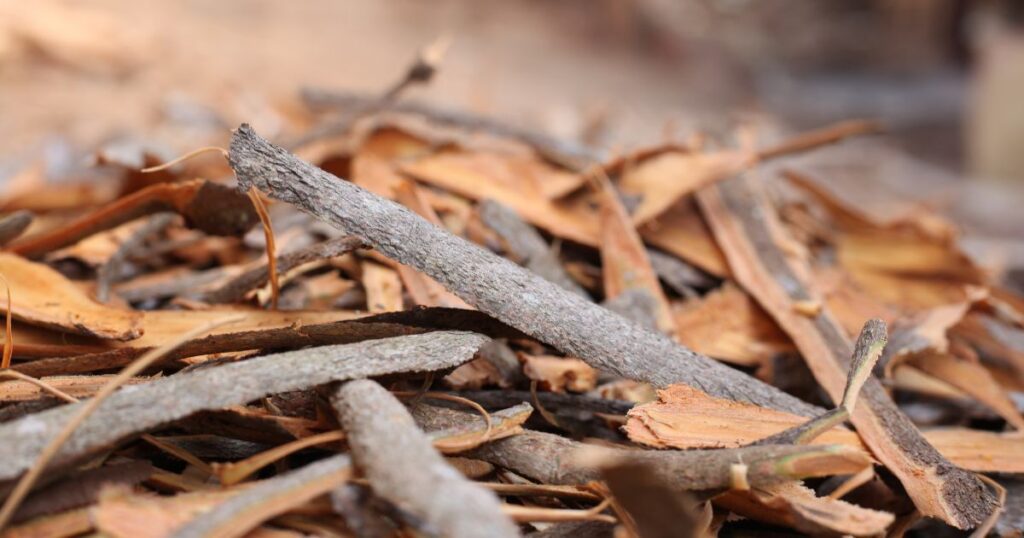
In Madagascar fragrance is everywhere. In the warm air, in the leaves and bark of the trees. On the island’s northeastern coast in the Sava region, growing vanilla structures the local economy and has paved the way for cultivation of other aromatic plants, such as vetiver, geranium, and ginger. As well as the cinnamon tree: essence extracted from its bark was added to the Symrise perfumers’ palette in 2018.
The cinnamon tree is a demanding plant. As an invasive species, it needs to be extremely carefully managed. If it gets out of control if can threaten natural balances and cause biodiversity loss. However, when properly regulated it becomes an invaluable ally thanks to the hardy tree’s rare gift of being able to grow almost anywhere, including in degraded soil.
This is the challenge tackled by La Ferme des Hauts, a Symrise property lying on the red land of Sava. Around 15,000 cinnamon trees were planted there on around twenty hectares in 2020 and 2021. The trees are not yet productive because cultivating them requires a lot of time and various specialist skills. Every stage is important, from trimming the branches to managing growth and finding techniques for harvesting the bark. “Our goal is to fully control the species,” says Laurence Briand, country General Manager for Symrise Madagascar.
Originally, however, La Ferme des Hauts was almost bare, aside from a small wood in the lower part of the land. The project was designed as a testbed for regenerative agriculture, to revitalize depleted soil, structure crops, and rebuild balances. Alongside vetiver, a major first on the red Sava soil, cinnamon trees occupy the most degraded areas, while the steepest slopes are home to acacia trees which will provide firewood for the Benavony factory a few kilometers away.
The approach is part of an initiative certified by the Union for Ethical BioTrade (UEBT) which promotes responsible practices: supply traceability, collaboration with local producers, respect for agricultural cycles thanks to crop rotation, and constant vigilance to protect biodiversity and avoid deforestation.
“Proper management of the supply chain means working with farmers and encouraging them to harvest at the right moment,” explains Clément Cabrol, Head of Raw Materials Purchasing for Symrise Madagascar. “But never to harvest too much or too often.” Fortunately, essence of Madagascar cinnamon has zero safrole content, since the molecule was banned from fragrances thirty years ago. On the other hand, it does have very high levels of cinnamaldehyde, giving it an extremely fresh dimension. The ingredient offers perfumers a unique field for creative expression. Cinnamon is both warm and spicy, adding substance and texture to compositions, and is part of a sustainable, controlled supply chain. A true symbol of raw materials that convey an aroma as well as a commitment.
Visuals : © Symrise / Romain Bassenne







Comments