Cette publication est également disponible en :
 Français
With its stony deserts, misty mountains and forests watered by the monsoon, Dhofar shows an unexpected face of Oman. This land of contrasts is home to extraordinarily biodiversity. From ancient frankincense trees to Arabian leopards, we take a deep dive into a fabulous natural sanctuary, the only one of its kind on the Arabian Peninsula.
Editorial partnership
A miracle occurs in the heart of the desert, every year without fail. From June to September, monsoon clouds and cool winds embrace the Dhofar region, veiling Jabal Samhan, Jabal Al Qara, and Al Qamar mountain ranges in mist. While the latter two bloom under a lush emerald canopy, the first retains its original hue, yet, like its neighbors, it hosts a flora uniquely its own. The magic unfolds in southern Dhofar, the Omani region bordered by Yemen to the east and stretching 250 kilometers west to the Sea of Oman, covering a little under 100,000 square kilometers in all. It’s hard to believe we’re in the southeast of the Arabian Peninsula, so fresh is the water flowing in the wadis – seasonal rivers – and so verdant and flourishing is the vegetation. This recurring profusion is made possible by the khareef season, the southwest monsoon that arrives from India across the Sea of Oman. An endless light haze runs from sea level all the way up to the mountaintops, forming an oasis of vertical mist also known as a forest of clouds. It vanishes on the northern slopes of the mountains where the desert wind blows and the aridity that characterizes the Arabian Peninsula reasserts itself to create a rocky steppe-like landscape with a scattering of flora and occasional fauna. This landscape includes Wadi Dawkah. The spectacular contrast means Dhofar is home to unique biodiversity, featuring two-thirds of the 1,450 flower and plant species recorded in Oman, approximately 145 of them restricted to southern Arabia. “Dhofar is the Omani paradise,” says Dr. Laila Al Harthy, Head of Botany and Conservation at the Oman Botanic Garden. She leads a team recording and conserving all the Sultanate’s plant species as well as advising organizations working to preserve this unique heritage.
Boswellia sacra, a symbol to protect
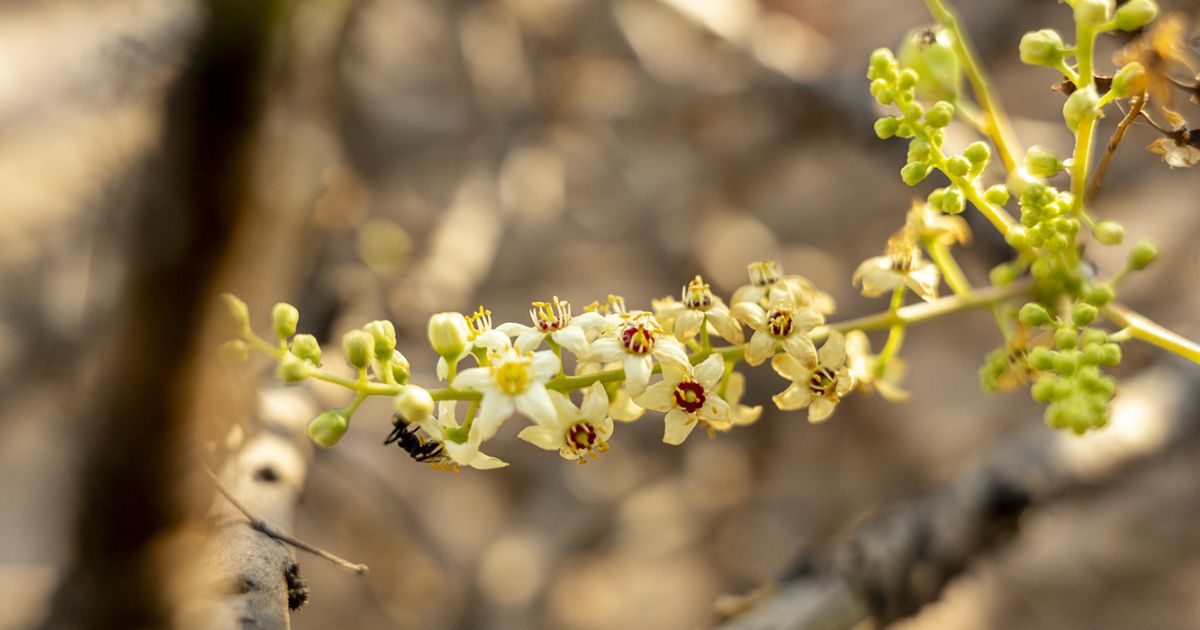
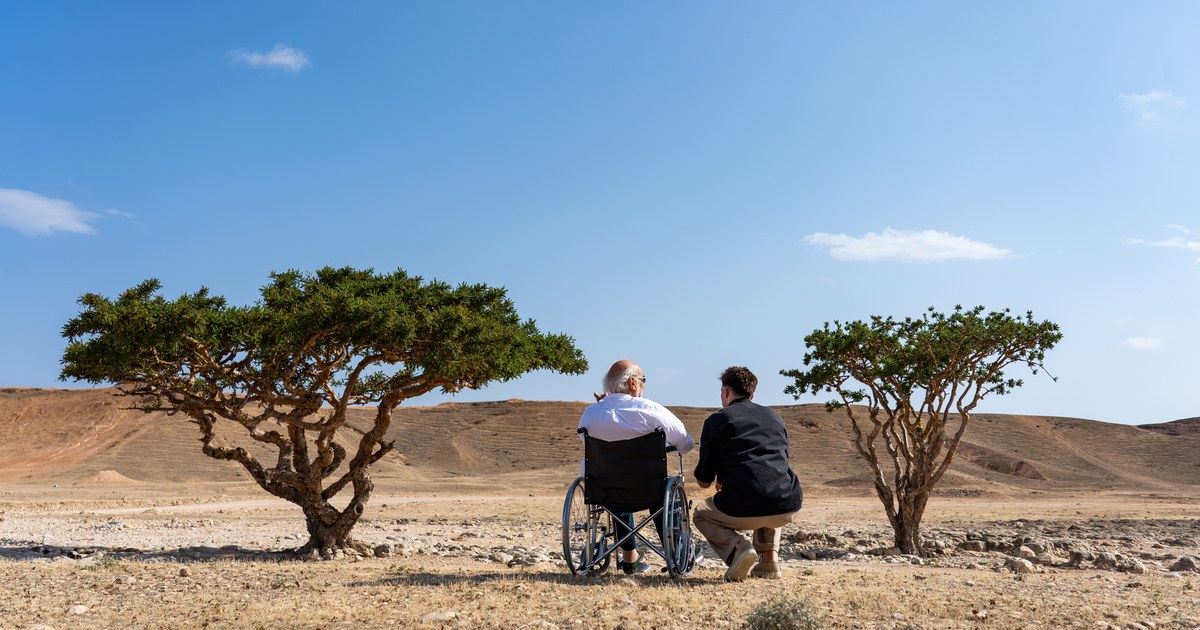
Boswellia sacra symbolizes this paradise on earth. The deciduous frankincense tree has adapted to extremely dry conditions and grows on rocky slopes, in wadis and, in particular, in the desert valley of Wadi Dawkah where vegetation is sporadic. The khareef struggles to make much of an impact on the rocky soil. Nevertheless, thousands of Boswellia sacra along the former Incense Trade Route stand alongside succulents like the native Aloe dhofarensis, aromatic shrubs such as Lavandula dhofarensis, and species that play a role in building a collaborative ecosystem: Indigofera spp., nitrogen-fixing bushes that boost soil fertility, and Pulicaria spp., a highly important shrub for pollinators. This illustrates the extraordinary diversity that reigns on the site, where shrubs account for around 65% of flora, reflecting adaptation to arid conditions.
A benchmark survey in 2026 recorded around 100 plants from about 30 families-species from Wadi Dawkah. A decade ago, the frankincense tree was classified as vulnerable and in danger or threatened with extinction, on the International Union for Conservation of Nature Red List, mainly due to overgrazing by dromedaries, excessive harvesting, and overly frequent or intensive tapping whose effects can include triggering fatal insect invasions. As part of efforts to preserve the species, Dr. Laila Al Harthy works as a member of the advisory committee of Wadi Dawkah to teach sustainable cultivation and harvesting methods alongside employees involved in the Wadi Dawkah project. The Botanic Garden in Oman has been documenting the plant biodiversity of Boswellia sacra habitats over the past 20 years through the identification and recording of plant species at relevant sites, as well as the collection and storage of seeds in a seed bank. In-depth study of the tree’s life cycle in its natural setting is designed to make it possible for Boswellia sacra to reproduce without human intervention, one of the challenges the Wadi Dawkah Scientific Advisory Council is tackling. “To guarantee its long-term future, the tree cannot live alone,” explains Dr. Laila Al Harthy. “We need to encourage beneficial interactions with other plants, insects, animals, and so on, to ensure future specimens can germinate, and that’s something we’re working on actively.”
From dusty plateaus to thick forests
Halfway between Wadi Dawkah and the forest of clouds lies a series of increasingly less arid zones comprising dry plateaus and limestone slopes dotted with shrubs, succulents and a scattering of trees. One such place is Jabal Samhan, a small, half-moon-shaped mountain range east of Salalah, the capital of Dhofar province. Further south are the coastal ranges irrigated by the khareef, where dense forests thought to be vestiges of paleo-African vegetation flourish. The trees growing there include the Terminalia dhofarica, whose huge trunk can reach a height of 12 meters. The luxuriant landscape boasts a rich understory of shrubs, climbing plants and ferns alongside the umbrella-shaped Arabian dragon tree (Dracaena serrulata), currently in decline, and other species .
While the baobab (Adansonia digitata) comes from Africa, it also grows in three locations on the Arabian Peninsula, two of them (Wadi Hinna and Dhalkut) in Dhofar. Wadi Hinna features around 100 specimens between 10 and 20 meters tall. These trees may have been introduced during the era of Oman’s extensive trade with Africa.
Arabian leopards, hyenas and whales
Traveling back even further in time, 160 million years ago during the Late Jurassic, Africa and India began to rift apart. We now know that the fauna living in Dhofar perpetuate the ancient ties between the two regions. Dhofar is home to 67 species of wild mammals.
Several large carnivores reign at the top of the food chain, including the Arabian leopard (Panthera pardus nimr), a rare endangered species, the striped hyena (Hyaena hyaena) and the Arabian wolf (Canis lupus arabs). Dhofar’s wildlife also includes three species of foxes: the discreet Blanford’s fox (Vulpes cana), which lives in the mountains, Rüppell’s sand fox (Vulpes Rueppelli), which prefers sandy, gravelly areas, and the red fox (Vulpes vulpes), which is ubiquitous. Two small felines inhabit the region: the African wildcat (Felis lybica) and the sand cat (Felis margarita), both fully adapted to desert environments. Then there is the common genet (Genetta genetta), native to Dhofar, the honey badger (Mellivora capensis), famed for its aggressive temperament, and the white-tailed mongoose (Ichneumia albicauda), with the badger and mongoose both known to venture into farms and gardens.
The herbivore population includes three dominant ungulates: the Arabian sand gazelle (Gazella marica), rarely encountered in the wild today, the Arabian gazelle (Gazella arabica), which prefers gravelly plains, and the Nubian ibex (Capra nubiana), emblematic of mountainous terrain and often represented in ancient petroglyphs. The rock hyrax (Procavia capensis) is a gregarious animal and ideal prey for large predators, while the Cape hare (Lepus capensis) stands out for its remarkable ability to adapt to vegetation-poor settings.
Several insectivores have made Dhofar their home, including two hedgehog and three shrew species. The desert hedgehog (Paraechinus aethiopicus) inhabits the plains while Brandt’s hedgehog (Paraechinus hypomelas) favors higher altitudes. The shrew family includes the Arabian shrew (Crocidura arabica), Crawford’s gray shrew (Notiosorex crawford) and the tiny Etruscan shrew (Suncus etruscus).
There are ten or so species of rodents, including the spectacular Indian crested porcupine (Hystrix indica). Several mostly nocturnal species of rats, mice, gerbils and jerboas further swell the region’s animal population. The most common species are the Cairo spiny mouse (Acomys cahirinus) and golden spiny mouse (Acomys russatus), one active by day, the other by night. Dhofar is also an important refuge for bats, with at least 17 species identified. Most visible is the Egyptian fruit bat (Rousetus aegyptiacus), a large, fruit-eating bat with a wingspan of up to 60 centimeters. The Dhofar pipistrelle (Pipistrellus dhofarensis), in contrast, is one of the smallest species, while the long-eared myotis (Myotis evotis) uses its extraordinary hearing to detect prey, such as scorpions, on the ground. The list of mammals would not be complete without mentioning the family’s marine member, the humpback whale that inhabits the Sea of Oman: the only non-migratory population anywhere in the world!
Preserving the soul of Oman
Oman’s biodiversity conservation efforts are supported through a wide network of national institutions and international frameworks, including initiatives linked to UNESCO, working in collaboration with local partners. Alongside the Environment Authority, the Oman Botanic Garden and other organizations play a key role in safeguarding the Sultanate’s natural heritage. The Environment Society of Oman (ESO) plays an important role in efforts to preserve biodiversity and has been active in supporting the protection of the country’s terrestrial and marine ecosystems since 2004. It runs awareness-raising campaigns targeting schools and the wider public, and supports scientific programs including studies of sea turtles, coral reefs, mangroves, and the Arabian leopard. In collaboration with authorities and local communities, ESO also helps promote more sustainable development and improve knowledge of Oman’s outstanding natural heritage. In this way, these combined efforts contribute to preserving nature and, ultimately, the soul of the Sultanate.
Credits:
Visuals: ©️ Amouage
Conception & Partnership Director: Mathieu Chévara
Film Director: Eléonore de Bonneval
Videographers: Ateeb Ali, Mulook Albalushi
Video Editor: Jean-Philippe Derail
Sound design: Perfecting Sound Forever
Title design: Vianney Bureau, Mikaël Charbonnier
Amouage: Renaud Salmon, Andras Komar, Dominique Roques, Matthew
Wright, Rayyan Alabdullatif
Special thanks to Arielle Lauze.







Comments