Cette publication est également disponible en :
 Français
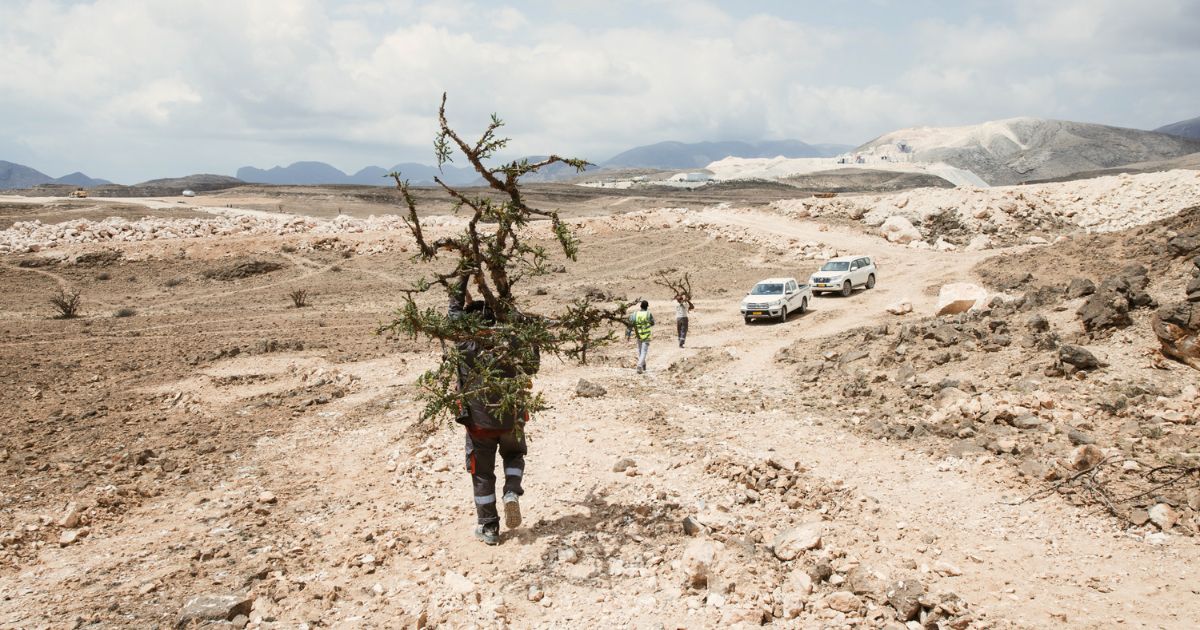
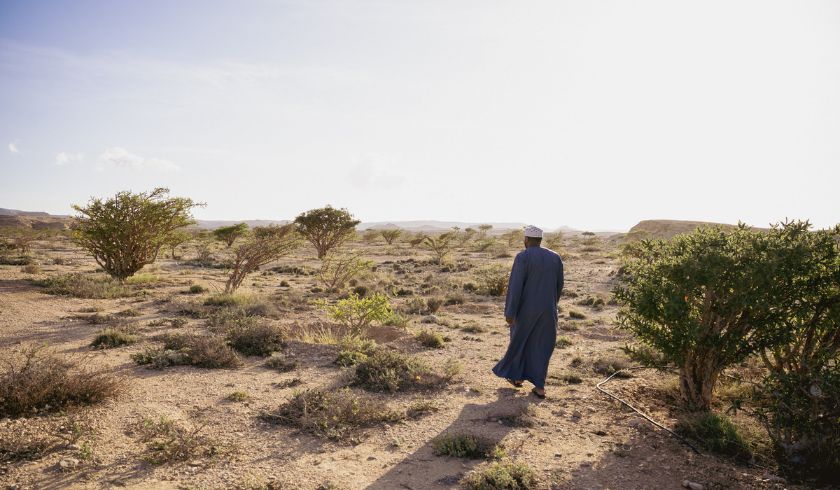
Matthew Wright, Director of Natural Ingredient Platforms at Amouage, has a very clear goal: “To transform Wadi Dawkah UNESCO World Heritage Site into the world’s center of gravity for frankincense, and to create a unique, must-see tourism destination. As such, part of our role as stewards of Wadi Dawkah, we seek to make the site a true protective site for threatened frankincense trees.” The project, run in close cooperation with the Omani government, which began after a historic agreement was signed between Oman’s Ministry of Heritage and Tourism and Amouage in September 2022, aims to protect one of the Sultanate’s most iconic treasures: Boswellia sacra. The mythical tree whose resin has been perfuming the world for thousands of years grows across Southern Arabia, some parts of Yemen and in the Dhofar Governorate in southern Oman.
Editorial partnership
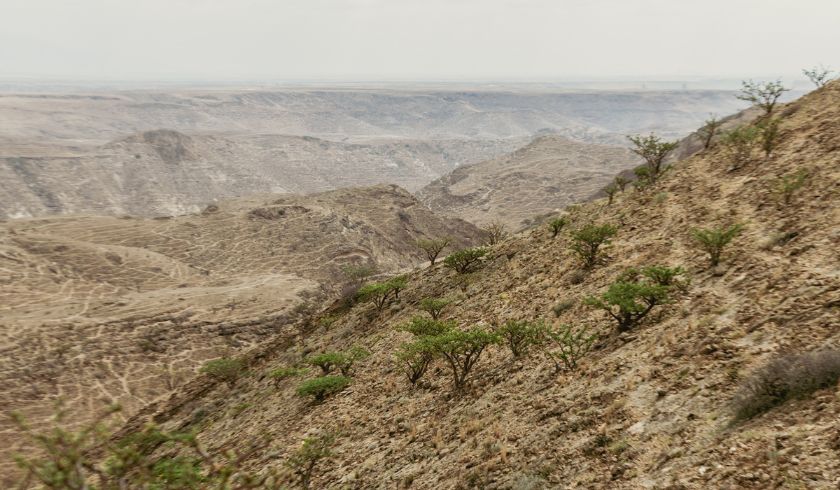
Frankincense represents an extraordinary, but fragile, natural heritage. Classified as “near threatened” on the International Union for Conservation of Nature (IUCN) Red List, the frankincense tree is now monitored with increased vigilance. A study published in 2025 by the Journal of Arid Environments describes the range of factors putting it at risk: overgrazing of saplings, excessive resin harvesting, parasites, flooding and strong winds. Some of these phenomena are likely to be amplified by the effects of climate change, leading to higher numbers of frankincense trees dying in exposed areas.
Economic development and urban expansion have created new pressures upon frankincense trees’ natural environments and the frankincense trees have had to be moved. Boswellia sacra is Dhofar’s ecological and cultural bedrock, but it is also vulnerable and needs protection.
Digging deep
To ensure that the sustainable development of Wadi Dawkah is carried out with scientific rigor, Matthew Wright and his team have organized local, national and international partnerships with institutions and individual researchers. The result was a Scientific Advisory Council, set up in 2025. Specialist members include experts from the Environment Society of Oman (ESO) and Oman Botanic Garden.
The Botanic Garden has been studying Boswellia sacra in depth since 2006, collecting seeds, introducing germination protocols, setting up a seed bank and carrying out genetic research. Its mission? To produce the essential scientific knowledge that makes putting together a robust conservation strategy possible. A new study aims to model the future evolution of the frankincense tree population in response to climate scenarios. “People think the trees will always be here. But it’s simply not true,” says Laila Al-Harthi, Head of Botany and Conservation. The Scientific Advisory Council aims to provide external scientific rigor and challenge to radically improve the health – in the widest possible meaning of the word – of the site.
As for the Environmental Society of Oman, it has initiated a 9-month major biodiversity audit to establish an inventory as the basis for long-term ecological improvement plans. Thanks to the seasonal monsoon (Khareef), the region boasts a rich biodiversity: It is home to two thirds of the country’s flora.
“To give the initiative the best chance of success, ESO is in regular contact with the Environment Authority and the Ministry of Agriculture, Fisheries and Water Resources,” explains Suaad Al Harthi, Executive Director of the Environment Society of Oman (ESO). A close partnership resulting in the organization of frankincense tree planting campaigns and actions to raise awareness among local communities.
Sustainable strategies
In Dhofar, Boswellia sacra is a core component of cultural identity and economy. Efforts to protect it are therefore not simply about saving a tree. They are also protecting an entire ecosystem, the ancient craft of frankincense harvesting, as well as providing sustainable economic opportunities for the communities who depend on it. In addition to gathering scientific data, the Scientific Advisory Council works to encourage the active involvement of local communities. For a protection strategy to be sustainable, it has to reconcile traditional knowledge with scientific discoveries: for example, by restoring the ancient practice of mobile grazing, which, as studies have shown, allows the soil enough time to regenerate during the Khareef. As well as respecting the frankincense trees’ resting period, it is also important to opt for wild harvesting techniques and adhere to natural cycles.
Sustainable harvesting, paying closer attention to ecosystems, providing sustainable employment opportunities toward local workers: Wadi Dawkah ticks all the boxes. The year 2025 brought recognition for its best practices. The site earned FairWild certification, a worldwide benchmark for sustainable sourcing of wild ingredients. A first on the Arabian Peninsula – and a major milestone for Amouage as it takes another step toward its goal of building a virtuous and controlled supply chain for Omani frankincense.
As part of the Vision 2040 national strategy, Wadi Dawkah aspires to become a global reference for ethical and transparent sourcing of wild ingredients for perfumery. And as a central hub of sustainable development, it could set an inspiring example on a broader scale: Oman has a rich natural and agricultural botanical heritage that extends beyond frankincense to include the Jabal Al Akhdar rose and native myrrh.
Credits:
Visuals: © Amouage
Conception & Partnership Director: Mathieu Chévara
Film Director: Eléonore de Bonneval
Videographers: Ateeb Ali, Mulook Albalushi
Video Editor: Jean-Philippe Derail
Sound design: Perfecting Sound Forever
Title design: Vianney Bureau, Mikaël Charbonnier
Amouage: Renaud Salmon, Andras Komar, Dominique Roques, Matthew
Wright, Rayyan Alabdullatif
Special thanks to Arielle Lauze.






Comments