Cette publication est également disponible en :
 Français
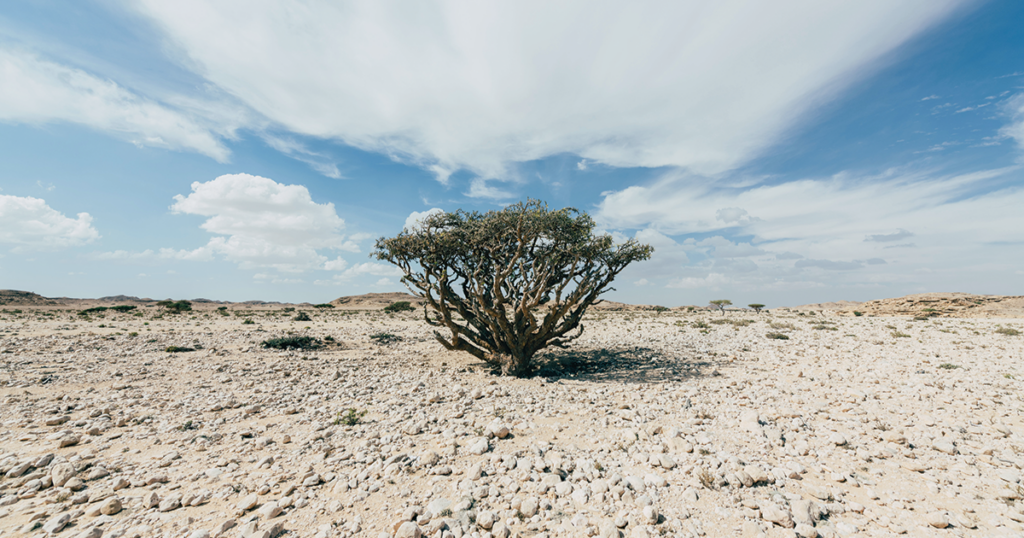
In a corner of Arabia Felix – “Happy Arabia,” the Latin name used by geographers to refer to South Arabia – lies the cradle of frankincense: Wadi Dawkah, 3,500 acres at the heart of the Dhofar region, a rocky land in the south of the Sultanate of Oman, where thousands of frankincense trees grow.
Editorial partnership
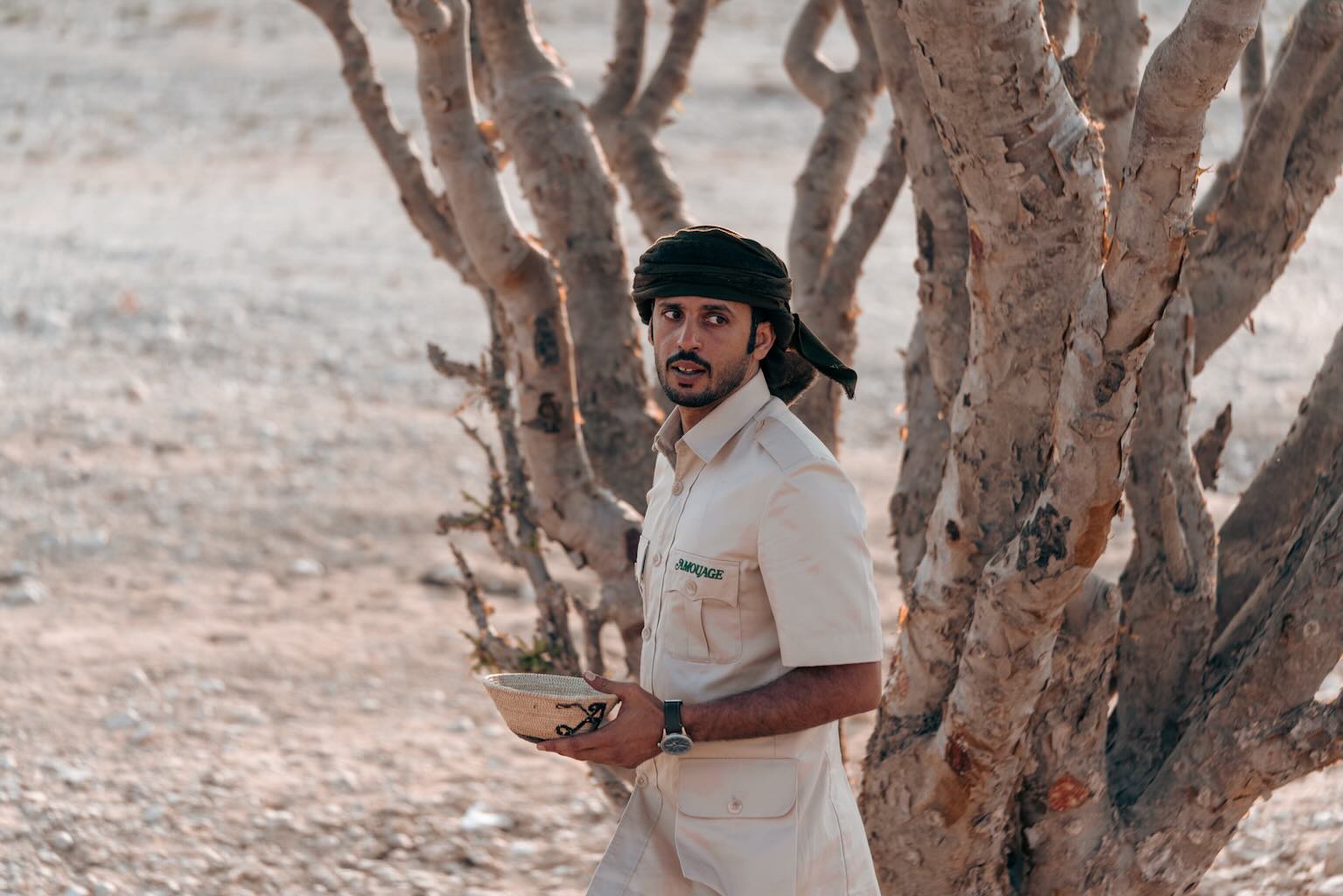
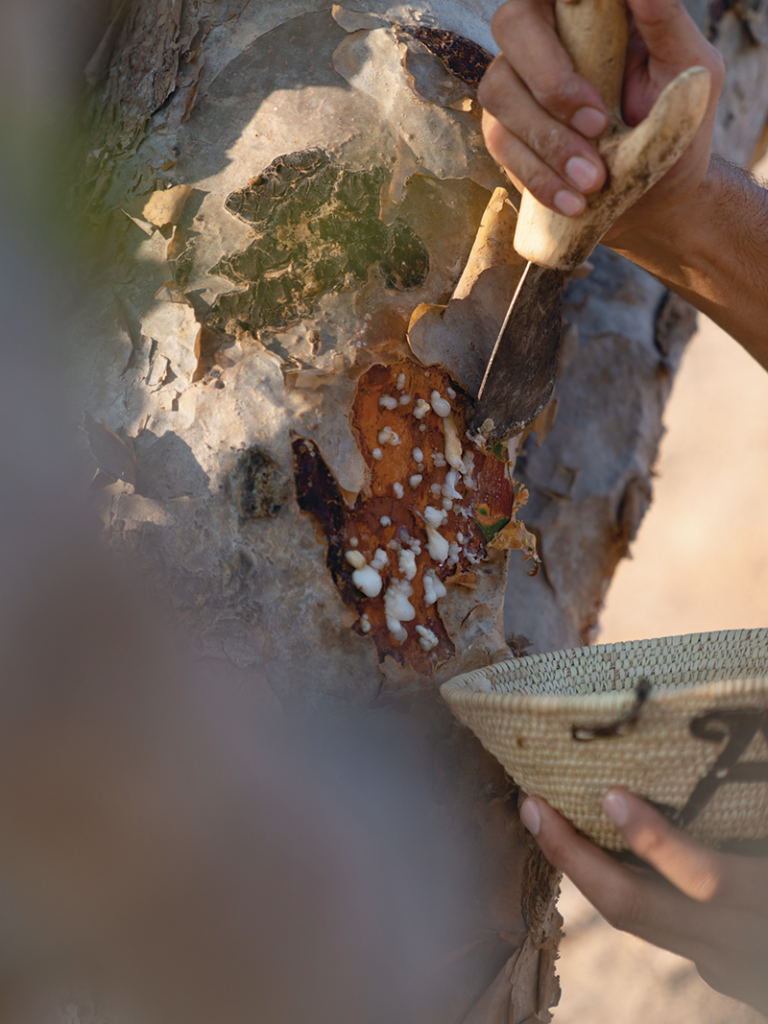
The Dhofar Mountains rise in the distance, as if painted in blue. The ground is arid and bare. This is an isolated place, a 45-minute drive from Salalah. It’s an October afternoon and we are in Wadi Dawkah. A cool breeze blows, sparking the song of the paper-thin brown bark of the frankincense trees gently rustling in the wind. This sound tells us that this site is one of the places where Hojari, the highest grade of Omani frankincense, is harvested. The protected smart forest, one of four sites comprising the “Land of Frankincense” UNESCO World Heritage Site, boasts the perfect climate for Boswellia sacra, the botanical name for South Arabian frankincense. This small, knotty-branched deciduous tree produces an aromatic resin that was historically traded at the same price as gold. From June to September, during the khareef season, Wadi Dawkah is spared the heavy monsoon rains thanks to its location, protected from the desert heat of the Empty Quarter and far from the humidity of the Arabian Sea. A tree nursery, currently home to more than 5,000 saplings, has been set up at the entrance to the site. Other trees have grown naturally elsewhere in Wadi Dawkah, and their “tears” – the milky white sap drops that flow from the frankincense tree – have been harvested in the wild here for several generations; some trees appear to be over 100 years old. In ancient times, groups of shepherds who grazed their sheep and goats in the area used to exploit these trees, tapping them for resin they then traded in the market for rice and dates. While barely structured, the harvesting system was highly codified, as it remained unaltered for close to 3,000 years.
Although Wadi Dawkah was recognized by UNESCO in 2000 for its trees bearing witness to an ancient heritage of growing frankincense in the region, the site itself remained essentially symbolic for over 20 years. The resin was not exploited for perfumery here until 2022, when the Omani Ministry of Heritage and Tourism decided to rekindle the Sultanate’s frankincense industry and partnered with Amouage, the Omani High Perfumery House. After this agreement, most of the harvested resin began to be transformed into essential oil, making it a precious ingredient for perfumery.
Today, the goal at Wadi Dawkah is to produce high-quality frankincense essential oil whose process is transparent and traceable from the resin tear to the oil drop. This signals the development of a true Omani frankincense that is likely to benefit from a protected designation of origin. At the time of writing, eight key milestones needed to put this ambitious project into action have been identified.
Fencing the site
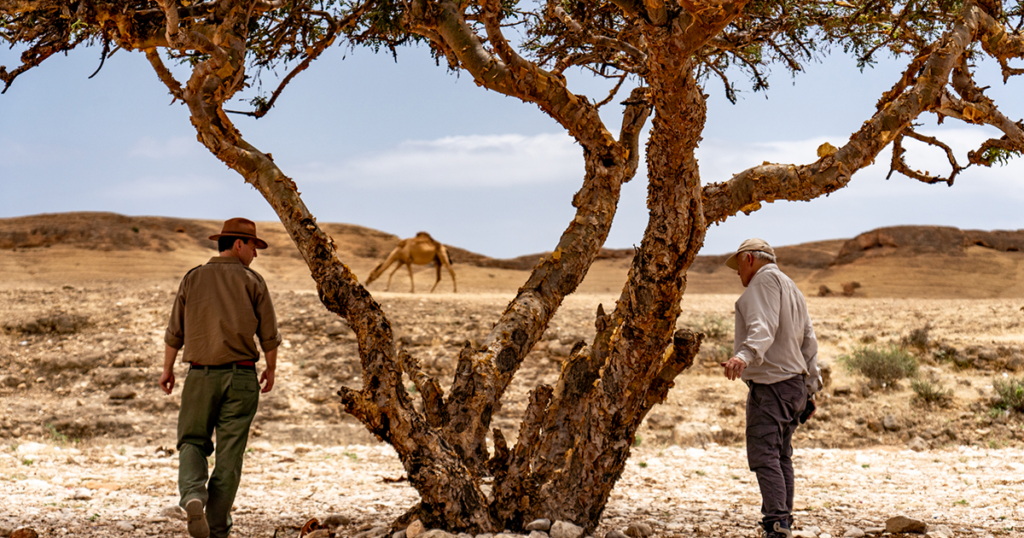
The first step was to protect the 3,500 acres of Wadi Dawkah with fencing, essential to guarding the young trees from the appetites of grazing dromedaries. These animals are capable of surviving for extended periods in arid zones simply by eating the leaves of frankincense trees. But the trees’ reproductive system relies on its leaves. Without leaves there can be no flowers or seeds, which in turn poses a threat to the survival of the species.
Forming a team
Rolling out a new management system at the site involved hiring a local team to care for the site’s environment and biodiversity. Eight people were hired and then given training in sustainability to ensure traceability of the frankincense produced, a must-have for the industry. The project includes setting in place the best working conditions for the team working on site, providing workers with the right tools. During the 1960s and 1970s, the discovery of oil provided more comfortable sources of employment than frankincense harvesting. Today, as the Sultanate seeks to pivot away from oil and diversify its economic activities, frankincense may offer a significant potential for job creation.
Jointly defining quality standards
As part of the drive to prepare the ground for a responsible industry, a frankincense standard was created based on a combination of scientific references, input from older members of the local Bedouin community, and the desire of younger people to learn about working with frankincense. Specialists from the Ministry, university researchers, perfume industry professionals and local communities collectively contributed to a process designed to make the most of the site’s potential, gaining insight from consultant Dominique Roques, the world-renowned ingredients expert who previously worked for the DSM-Firmenich composition house.
Monitoring the trees via QR codes
Amouage and the Ministry of Heritage and Tourism aim to create the first smart forest in the Gulf Cooperation Council (GCC) region. Every tree will be assigned a QR code that allows it to be identified and traced. Currently, around 5,000 trees have been geotagged. This means that every tree will be better understood and treated as a unique individual. The data gathered will include tree height, watering frequency, exact position in the wadi, yield, harvesting dates, etc. QR codes will generate technical information about production, which will then be used to design an efficient and replicable farming method. Other data will be available online to help visitors better understand local biodiversity.
Improving watering
Another task is to gain a more detailed understanding of the water requirements of frankincense trees. Prior to 2000, the trees grew wild and self-regulated, benefiting from exceptional climate conditions that produced high-quality resin. The 5,000 or so trees planted since the inscription of Wadi Dawkah on the UNESCO World Heritage List have sometimes been overwatered, with the roots of a number of trees rotting as a result. When Amouage became custodian of the site in September 2022, the irrigation conditions were redefined, and since April 2023, the frankincense trees have been watered less, as experts trust that they can thrive without excessive human intervention. This change in irrigation method did result in larger quantities of resin in March 2024, peak harvest time. The watering infrastructure also had to be upgraded because there were leaks, and several kilometers of pipes were changed. Water was pumped on the site from a depth of 85 meters to meet the site’s needs.
Modernizing logistics
The project aims to build a visitor’s center and manufacture, including an on-site extraction unit, allowing visitors to observe the distillation of resin into essential oil. The scale of the project means that frankincense production will once again be central to Omani industry, as tourism is developed and local people are reintegrated into value creation.
Seeking improvements
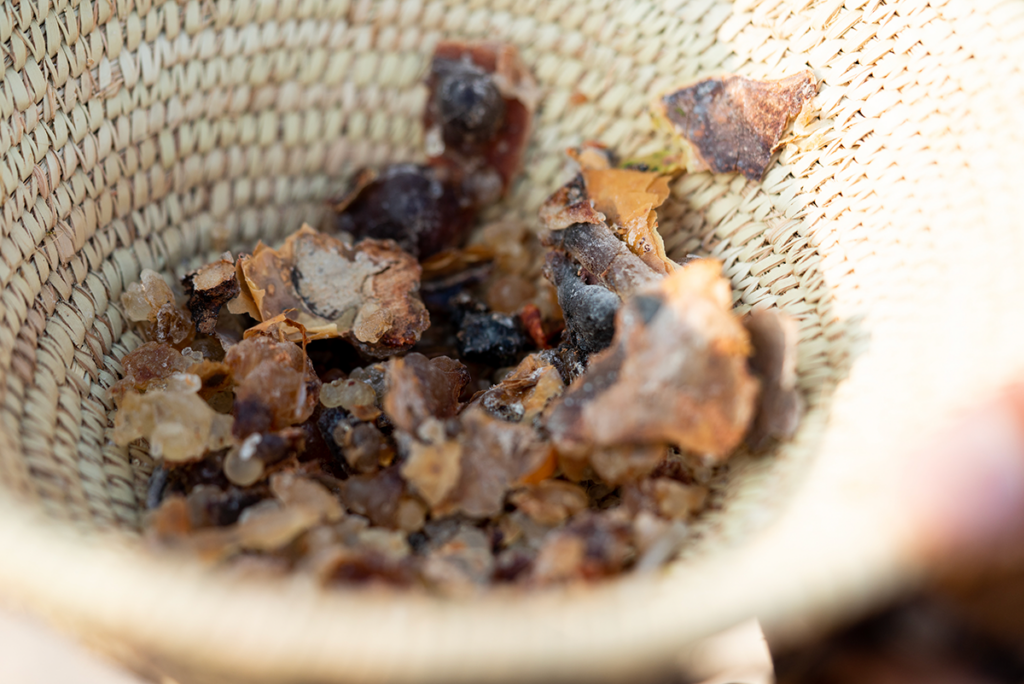
While every effort is made to minimize errors, some may inevitably occur. “We can identify errors in planning and execution because of data collection and transparency. We will learn and improve as we gain greater experience,” explains Matthew Wright, Head of Wadi Dawkah for Amouage. The first trial harvest of frankincense for perfumery began in September 2023. Three full-time employees were hired to manage the trial. The goal? To characterize the olfactory profile of the frankincense obtained in Wadi Dawkah and determine whether there are different qualities of resin on the site. “We know that frankincense extracted in Oman tends to have a high alpha-pinene content of over 70%. This high percentage is not in itself a proof of quality, but it distinguishes Omani frankincense from that sourced elsewhere. This frankincense is different, and that’s what interests perfumers,” says Matthew Wright. The production at Wadi Dawkah is aiming for sustainability rather than quantity. The goal is for Oman to become a model of excellence for frankincense, and Wadi Dawkah a model that can be reproduced throughout the region. The initiative is part of the broader Oman 2040 program designed to diversify resources in the Sultanate.
Achieving FairWild accreditation
One of the first initiatives delivered and supported by the Wadi Dawkah Scientific Advisory Council was securing sustainability certification for the site. That effort reached a defining milestone in 2025 through FairWild, an internationally recognized third-party sustainability accreditation for natural ingredient sourcing. To earn this, “there was a prolonged period of due diligence,” recalls Matthew Wright, Head of Wadi Dawkah for Amouage. “We looked into what we had accomplished, what we aspired to achieve, the integrity of our practices, how we consistently deliver on our commitments, and finally the site was subject to a third-party inspection.” For Wright, the achievement resonates far beyond the certificate itself. “What we’re really proud of is that Wadi Dawkah is the first location anywhere in the Arabian Peninsula to receive FairWild status. And the importance of this step is to show that international standards of ingredient sourcing can – and are – being upheld in the Sultanate of Oman.”
Main visual © Amouage






Comments