Cette publication est également disponible en :
 Français
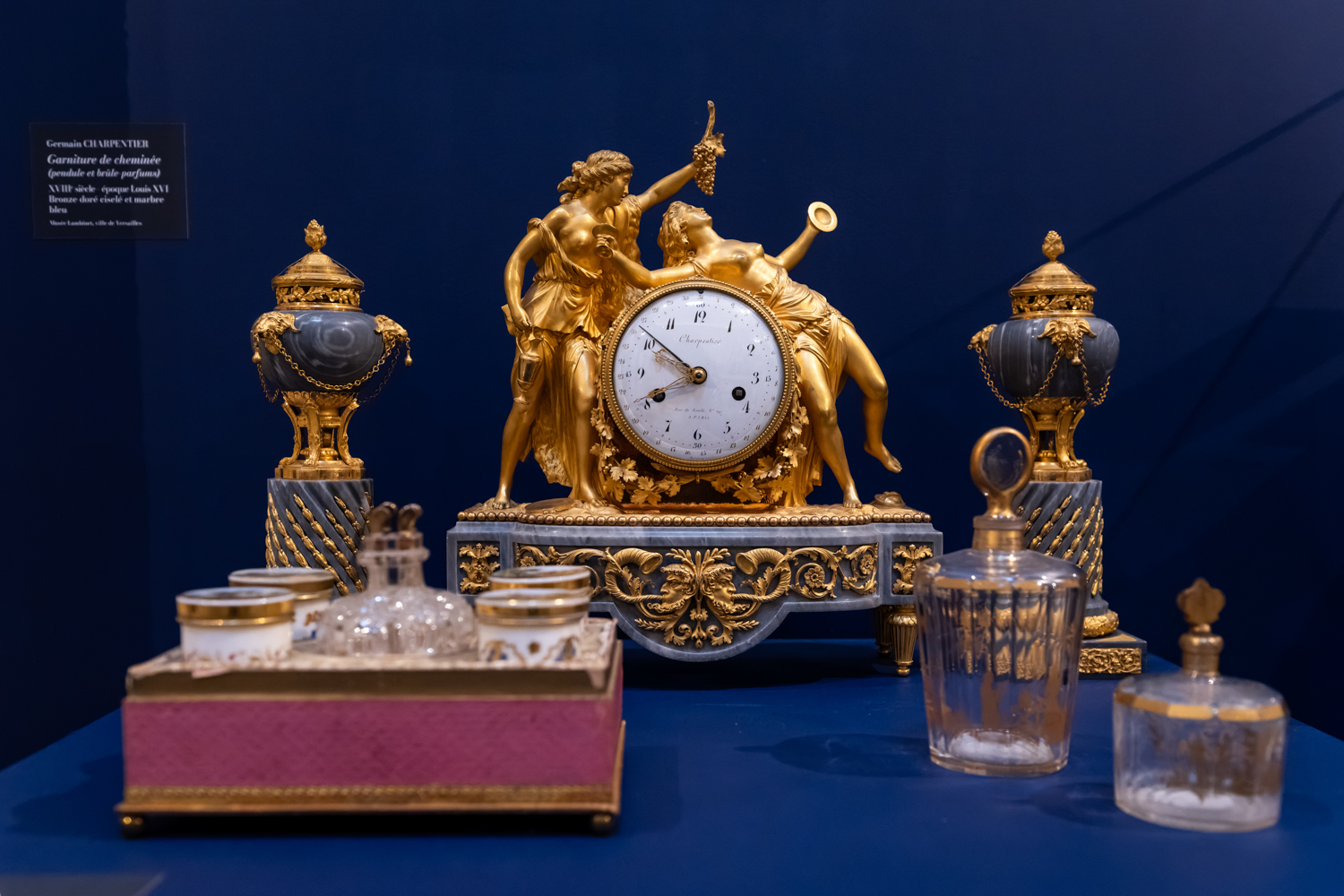
The history of perfumery is in the spotlight with a new exhibition in Versailles, L’Âme de la parfumerie française, voyage au cœur de l’élégance et du savoir-faire (The Soul of French perfumery: journey to the heart of elegance and savoir-faire). The Osmothèque, the international perfume archive, and Versailles town council have co-organized the event, while lead sponsor Mane is also showcasing some of the raw materials from its catalogue. We take you on a guided tour of the exhibition.
Editorial partnership
The exhibition explores the history and influence of French perfumery in the majestic setting of Espace Richaud, the former chapel of the royal hospital in Versailles. Each room presents the fragrances, bottles, archives and ingredients that together tell the tale of key moments that have forged the identity of French perfumery.
From kyphi to Caron
The visit begins with a look at the origins of fragrance, when it was used primarily to honor the gods. The treasures preserved by the Osmothèque include a reconstitution of kyphi, the precious Ancient Egyptian compound that was burnt as an offering, producing aromatic smoke, resinous, woody and spicy.
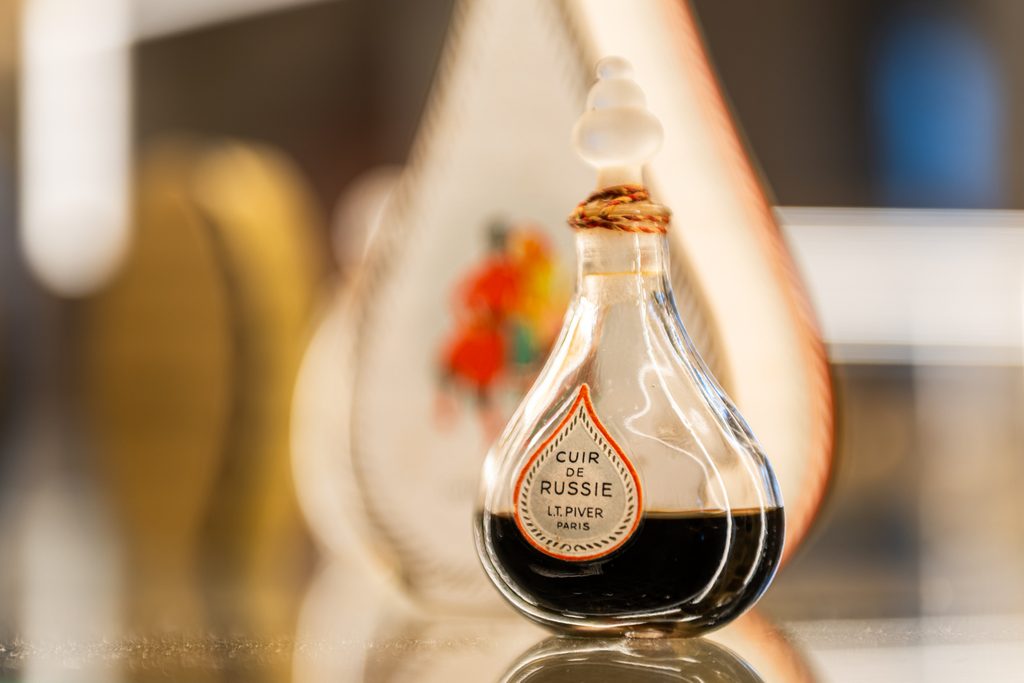
Down through the centuries, fragrance gradually moved away from the sacred sphere to take on a role centered on finery and elegance. France was at the heart of this transformation, thanks in large measure to the expertise of its artisan perfumers and the production of aromatic perfumery plants in the region around Grasse. The exhibition tells the story of this evolution through creations from pioneering houses such as Lubin, Houbigant and L.T. Piver, before going on to all-time greats such as Guerlain, Coty and Caron. Standout exhibits include original bottles of Cuir de Russie by L.T. Piver, L’Heure Bleue from Guerlain, and Coty’s Émeraude, as well as examples of how they were used in talc and scented powders. Some of the archives on show bear testimony to the growing popularity of perfumery. For example, there is a hand-written order for the house of Farina on behalf of Napoleon. He couldn’t do without eau de cologne, ordering hundreds of bottles a year!
From organic chemistry to haute couture
The rise of organic chemistry in the late 19th century provided perfumers with a groundbreaking olfactory palette. Newly minted synthetic molecules made it possible to move beyond simply reproducing natural aromas, opening the door to the creation of more abstract compositions. The exhibition invites visitors to delight their nostrils with a few of the molecules that have since become perfumery mainstays, such as vanillin, coumarin and isobutyl quinoline, famously used in Tabac Blond (Caron, 1919) to create a leather-tobacco accord.
Beneath the soaring dome of the former chapel, visitors can also discover and smell a range of historical formulas from the period, including the original formula for Shalimar from Guerlain and for Mon Parfum from Bourjois, now no longer available.
Fashion designers were quick to embrace this new-found creative freedom, realizing that scents offered a new territory for artistic expression. Following in the footsteps of the pioneering Paul Poiret came Gabrielle Chanel, Jeanne Lanvin and Jean Patou, who all began to explore the perfumery world. This movement accelerated in the post-WW2 years, with major haute couture houses turning fragrance into an extension of their identity.
One of the exhibition’s rooms is taken up by an impressive display of XXL-format bottles through the ages. These include Diva from Ungaro, Mugler’s Alien, Classique from Jean Paul Gaultier and Dior’s J’adore. A dazzling array of pieces that emphasize how the bottle is intrinsic to a fragrance’s identity and the creative vision of big-name houses.
From lavender to castoreum
On the first floor, the exhibition shifts focus to look at raw materials thanks to the loan of a fine selection of ingredients from Mane, the Grasse-based French composition house. Visitors get the chance to discover some of the treasures of the perfumer’s palette, as well as to understand how progress in extraction techniques has considerably broadened perfumery’s field of possibilities. Behind every technological innovation is the prospect that it may reveal new, sometimes unimagined, olfactory facets for a given plant. The same plant has three olfactory forms, whose profiles vary depending on the molecule that each process captures: the lightest and most volatile for essential oils, the heaviest for absolutes, with supercritical CO2 extraction making it possible to cover a far wider molecular spectrum.
There are also other natural ingredients to explore: absolutes of ambrette, labdanum, rose, orange blossom, tuberose, violet, narcissus, mimosa and vanilla. As well as supercritical CO2 extracts of ginger, jasmine sambac and jasmine grandiflorum, and a truly magnificent orris butter from Morocco. A broad spread of materials that bear witness to the extraordinary diversity of resources available to perfumers, and the creative possibilities they continue to unearth.
In the next part of the exhibition visitors can smell historic animal-derived materials that are now banned or no longer used, primarily for animal protection reasons: Tonkin musk, civet, ambergris and castoreum. These ingredients have left an indelible mark on the history of perfumery and inspired the development of synthetic alternatives. Tonkin musk drove the search for synthetic musks, and ambergris, once prized for its ambery, animal facets, is now replaced by Orcanox, a molecule developed by Mane from the sclareol found in clary sage.
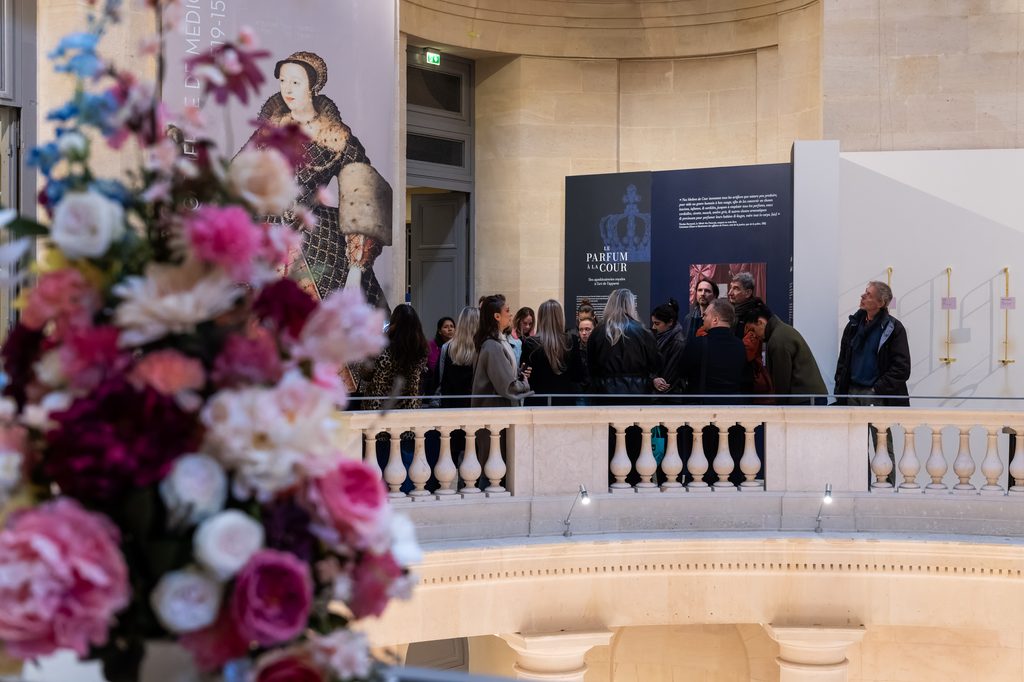
The exhibition as a whole offers an open invitation to discover, or rediscover, what lies at the soul of French perfumery: an on-going dialogue between materials, savoir-faire and creative endeavor.
Practical information:
L’Âme de la parfumerie française : voyage au cœur de l’élégance et du savoir-faire
Espace Richaud, 78 boulevard de la Reine, Versailles, France
Wednesdays to Fridays, 12 noon to 7 pm
Saturdays and Sundays, 10 am to 7 pm
Tickets: €7/€5/free for under 26s
Photos: Adèle Kiffer / Ville de Versailles




Comments